Best Places to Buy Original Art Online, Sorted by Who Chooses
Every list of the best places to buy original art online ranks the same sites on catalogue size and shipping speed. The difference that reaches you is who decided the work was worth listing, and the sites divide cleanly on that.
Every list of the best places to buy original art online is ranked on the wrong thing.
They sort by catalogue size, shipping times and how the checkout feels, which are all real and none of which will matter to you a year after the work is on the wall. I have read a lot of these lists since I stopped working in a gallery, and the thing they never sort on is the one thing I would have sorted on when I was the person doing the listing.
Somebody decided each of those works was worth putting in front of you, and the sites differ enormously in who that somebody was. On one of them it was a committee. On another it was nobody at all. That decision is upstream of every other difference, including the price, and it is the difference you can actually feel.
Before the list, the disclosure that belongs at the top rather than the bottom. I ran online sales for a small contemporary gallery in Korea for a few years, which means I have been on the selling side of consignment terms and commission splits and the conversation where an artist asks why the number is what it is. I have not bought from any of the platforms below. What follows about how each one works comes from what they publish about themselves, linked as I go, and what I say about the trade behind them comes from the gallery.
Nobody chose
Start at the open end, because it is where most of the volume is and where most first-time buyers land.
Artmajeur is explicit about this in its pitch to artists, which offers "Free and unlimited registration" alongside a "Reduced sale commission" and a network it puts at over 130,000 artists. There is no jury. An artist signs up and lists, and the catalogue is the sum of everyone who did.
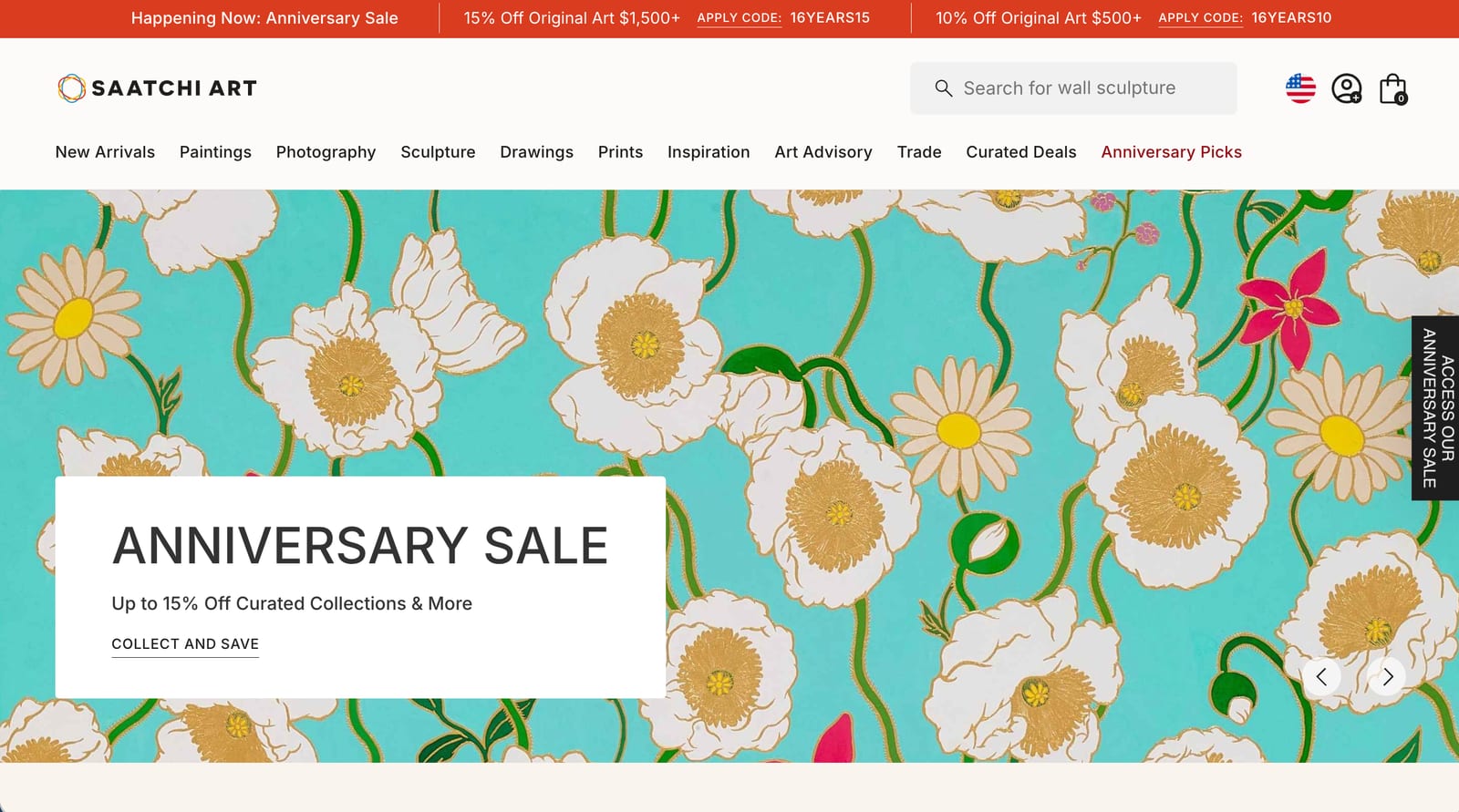
Saatchi Art is open in the same way, with one restriction that surprised me when I found it. Its artist policy states: "We do not currently support accounts for galleries, collectives, or third parties selling on behalf of artists." Any artist may list. No gallery may. That is why my own gallery never considered it, and I want to be precise about the reason: we were not eligible, not merely unsuited.
Etsy belongs in this group too, and it is the one most people actually open first. The complication there is not the door, which is open, but the shelf. A search for original art on Etsy returns originals, prints of originals and mass produced wall decor in the same grid, priced within a few dollars of each other and photographed the same way. Nobody sorted them for you, and the listing vocabulary will not do it either. That is the difference between three things a seller can hand you, and on Etsy it is entirely your job to tell which one you are looking at.

What open listing gets you is the largest choice on the internet and the lowest prices in this article. What it costs you is that nothing has been filtered, so the work of judging is entirely yours. If you have looked at a lot of art and trust your own eye, that is a feature. If you are buying your first piece and hoping the site has done some thinking for you, it has not, and the site will not tell you so.
Somebody glanced
Artfinder sits one step in. It asks artists to apply, and its seller documentation sets the bar at four to six works plus evidence of an existing online presence, ideally the artist's own website.
That is a low bar and it is a real one. It will not keep out an artist whose work is simply not very good, and it does keep out an account opened this morning. Somebody looked, once, before the work went up.
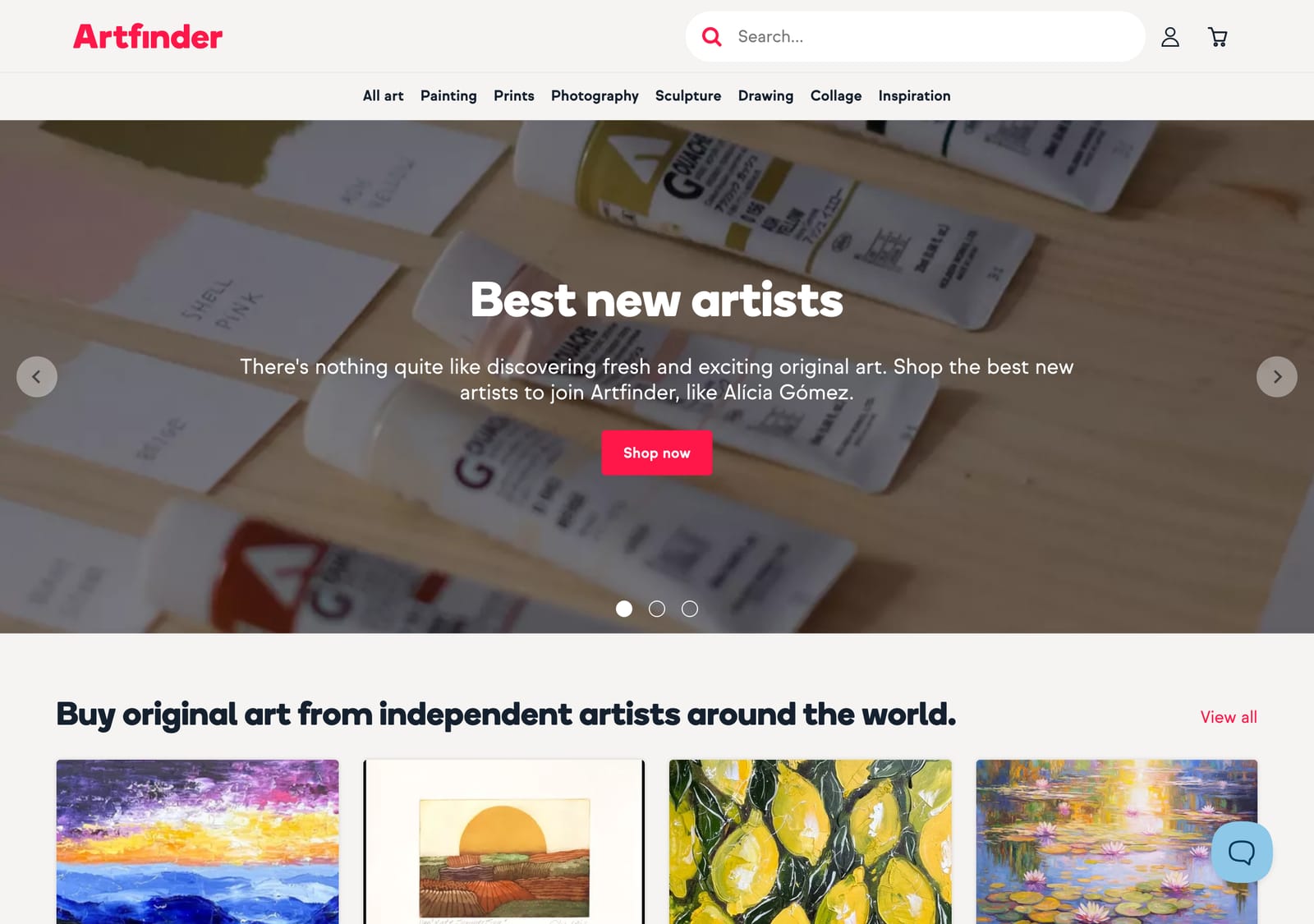
The money is close enough between the two open platforms that it should not decide anything. Saatchi Art's help centre is plain: "If you sell an original work, Saatchi Art will receive a 40% commission on the artwork price." Artfinder's commission and fees policy puts its own at 40 or 45 percent depending on the artist's plan. Both are below the half a gallery takes, and I have written separately about where that half actually goes.
I have written a longer comparison of those two specifically, because the difference that will reach you is not the commission. It is what each one excludes from returns.
A committee chose
Singulart runs an actual admission process. Its application page describes the sequence in three steps, the middle of which reads "Our admission committee will then review your application and let you know if you were accepted".
This is a different kind of filter from Artfinder's. Artfinder is checking that a professional exists. A committee is making an aesthetic judgment, on your behalf, before you arrive. Whether that is worth anything depends entirely on whether you would agree with the committee, and you have no way to find that out except by looking at what they let through.
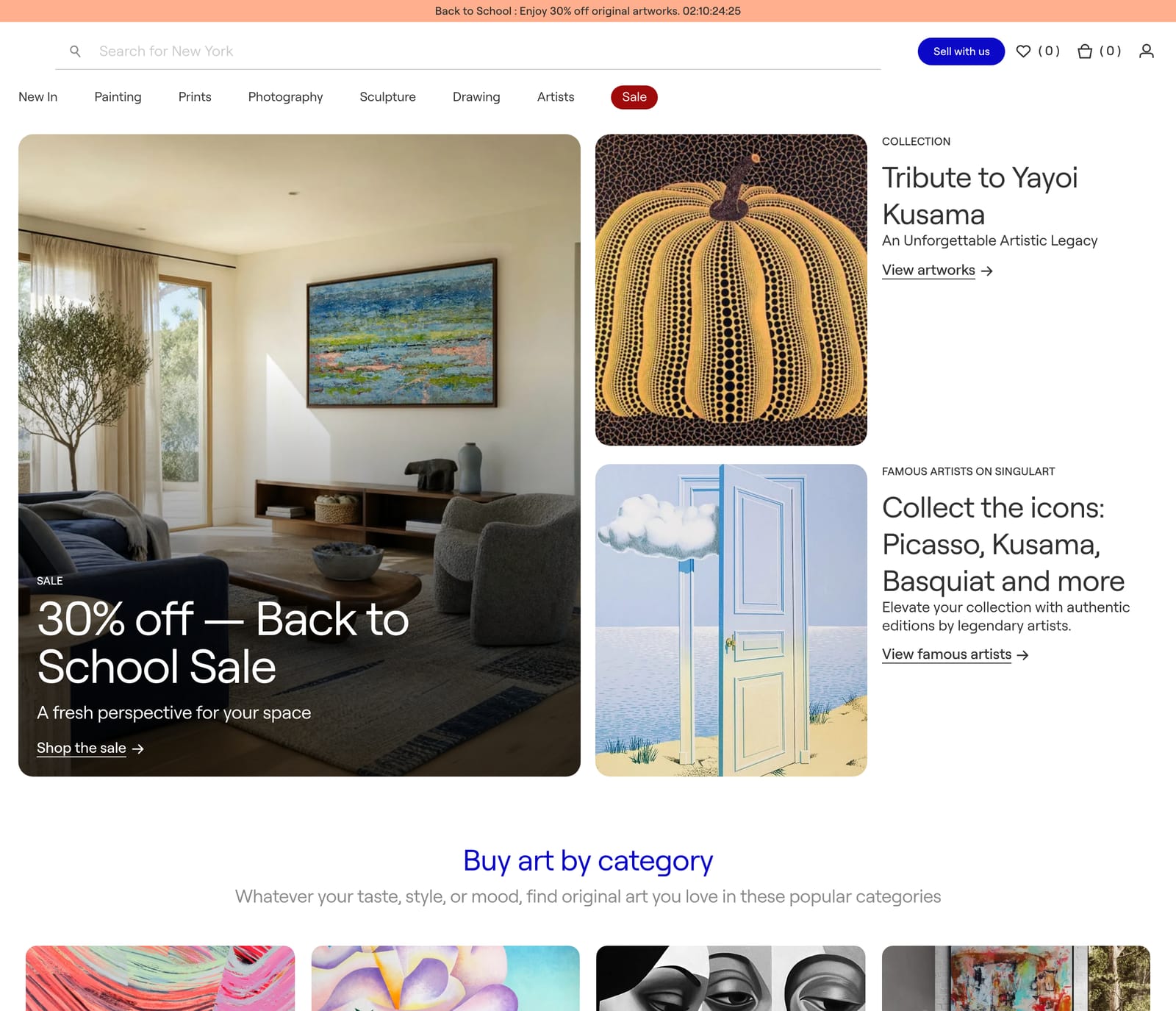
The honest limit of a platform that selects for you is that you are outsourcing taste to people whose taste you have not examined. That is exactly what a gallery is too, which is a point against my own former trade as much as it is against Singulart. The difference is that a gallery you can walk into.
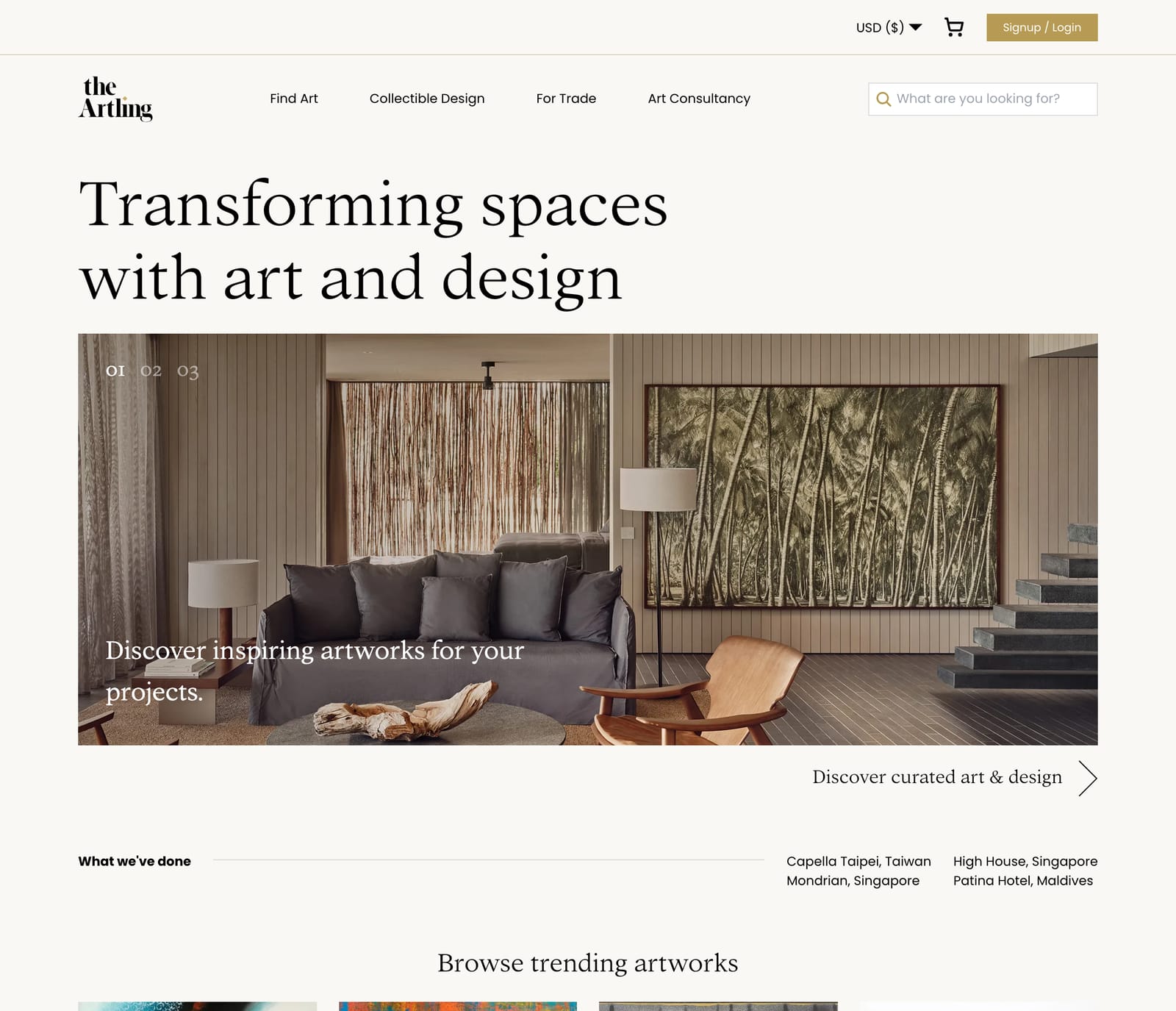
The Artling runs a narrower version of the same idea. Its seller guide opens the door two ways: "In order to join us as an Artist, Designer, or Gallery, you must receive an invite from our team or complete the Submission form on the website". An invitation is a filter with no published criteria at all, which is worth knowing before you read the catalogue as a judgment rather than a network. Much of its business is advisory work for interior designers and property developers, so the selection leans toward work that goes into a scheme.
I could not verify Singulart's commission from a page it publishes, so I am not going to state a number for it. Several art-business blogs quote figures between thirty and fifty percent and they do not agree with each other. Ask before you assume it is cheaper than a gallery.
A gallery chose, and then the platform listed the gallery
Artsy is the one that works differently, and it is the one my own gallery actually had a conversation with.
Its partnerships site is not addressed to artists at all. The page is headed Gallery Partnerships and the pitch is to "connect your gallery to the world's broadest collector audience". You are not browsing artists who decided to sell. You are browsing galleries that decided to represent, and the selection happened months earlier in a room you were not in.
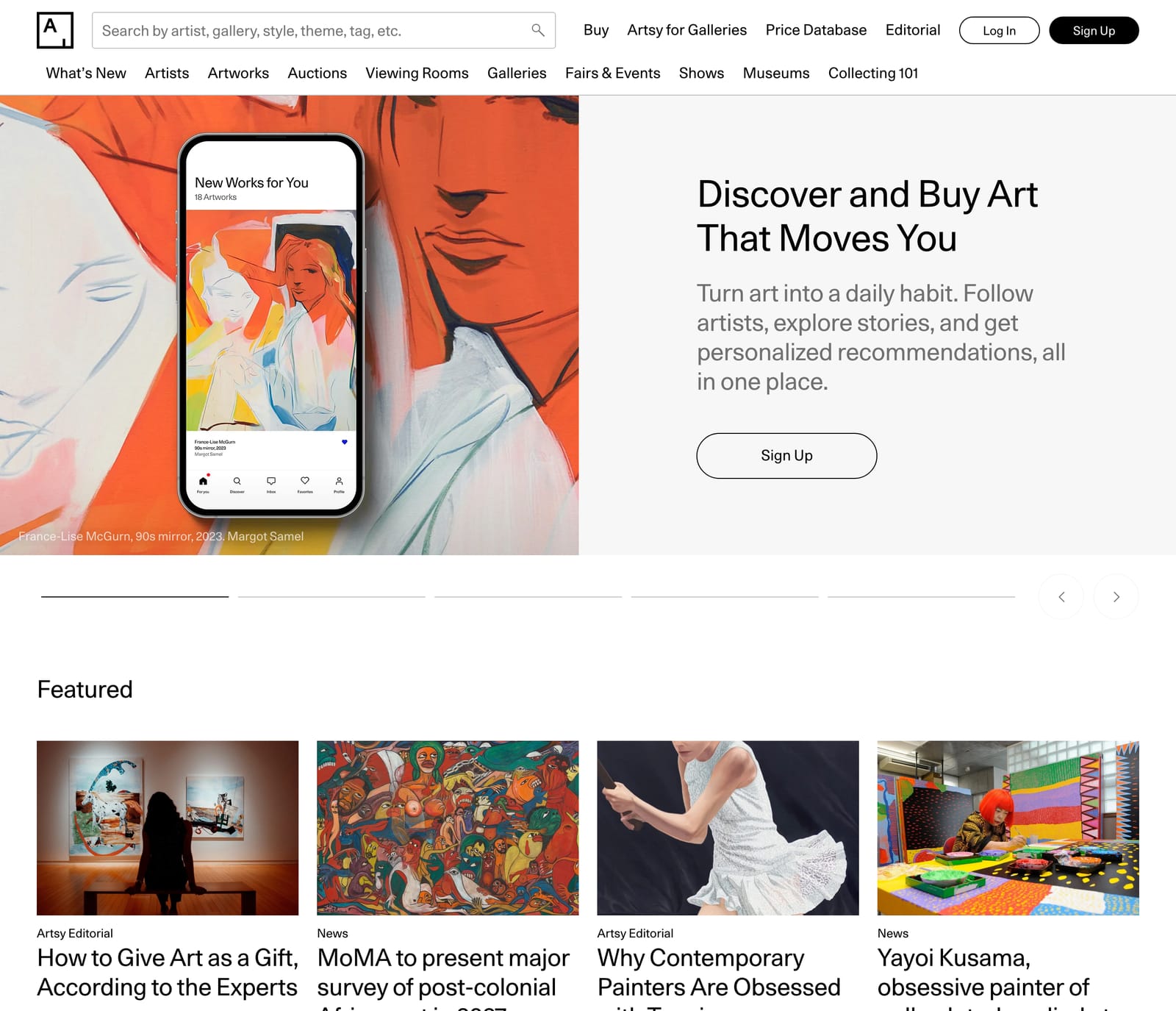
That is the deepest filter available and the prices show it. Work on Artsy has usually already passed through the system that sets prices in the physical art market, which is the same system that makes a painting cost more on a gallery wall than in the artist's studio. If your budget is a first original at a few hundred to a few thousand dollars, this is mostly a place to look rather than a place to buy, and looking is not a waste of an evening.
What the filter is actually selling you
Line them up and the pattern is not about quality. It is about who absorbs the risk of being wrong.
On an open platform, you carry it. If the piece turns out to be weaker than the photograph suggested, that was your call. On a platform with an admissions process, somebody has taken a share of that risk in advance, and the commission is partly the fee for having done so. On Artsy the risk was priced years ago by a gallery that put the artist on a wall.
What you are paying for as you move up that ladder is not better art. It is somebody else's judgment, and it costs real money.There is a version of this article that tells you the selective end is worth it. I do not think that is true for a first purchase, and here is the uncomfortable part, since I was on the other side of it. The thing a gallery sells that is genuinely hard to replace is not the selecting. It is the person who checked the piece before it shipped, packed it properly, and answered the phone when it arrived wrong. Those are separable from taste, and some open platforms handle them better than some galleries do. My own gallery did not accept returns and did not insure shipments.
Which one, and when
If you already trust your eye, start at the open end. Saatchi Art has the largest catalogue and Artmajeur the loosest door, and you will find things at both that no committee would have passed. Check what is excluded from the return policy before you decide the policy protects you, because on Saatchi Art photography and editions are not covered.
If you would rather someone filtered a little without deciding for you, Artfinder's application step is the smallest useful filter in this list.
If you want the judgment made for you and you are comfortable paying for it, Singulart is the one that publishes an actual committee. Ask what the commission is first.
And if you are looking at Artsy, look properly and buy later. The work there is inside a pricing system built for a different budget, and there is no shame in using it as a place to learn what you like.
The question underneath the whole list is not which site is better. It is how much of the deciding you want to do yourself, and what you are willing to pay somebody to do the rest. Both answers are legitimate. They are just not the same purchase, and no ranking by shipping speed will tell you which one you are making.