Saatchi Art vs Artfinder: the parts that matter after you click buy
Both take about the same cut from the artist. The differences that will actually reach you are who gets to list, what is excluded from returns, and whether you kept the box.
Someone would message a painter directly, having found them on Instagram, asking what a piece cost. And the painter would tell them to contact the gallery. The same gallery that was about to take half. I could not work out why anyone would do that voluntarily, and it took me a while to notice the pattern in who did it: the better known the artist, the more likely they were to hand the buyer back.
Some limits first, before I build anything on that. I ran online sales for a small contemporary gallery in Korea, and what follows is what I saw there, in one market, over a few years. This is inference from watching it happen, not anything I was told, and other countries may not work the same way.
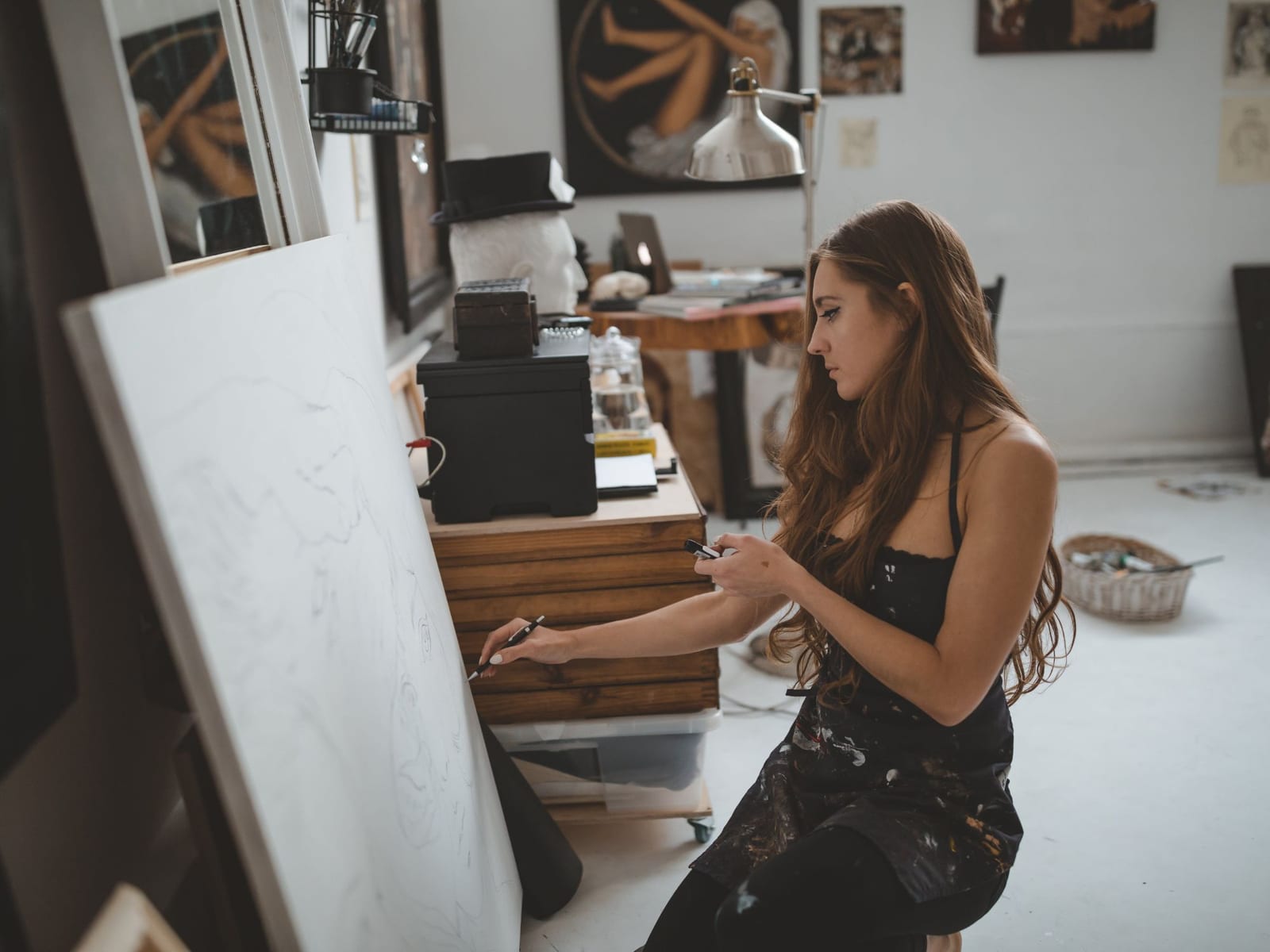
Why the better known artists sent people back to us
Two reasons, and they pull in opposite directions.The plain one is workload. Selling a painting is not the moment the money arrives. It is delivery, sometimes installation, issuing the certificate of authenticity, and then answering questions for as long as the buyer has them. An online shop would call that customer service. Most painters do not want to run one, and consigning to a gallery hands that entire job to somebody else.
The second reason is harder to say out loud. Selling your own work directly means naming a price to someone's face and then, quite often, being asked whether that price is negotiable. Plenty of artists treat their public standing as something to protect, and treat the work as belonging to a register above haggling. Some will not sell online at all. Some will not publish a number anywhere. An artist at the start of their career may accept the awkwardness because one sale matters more than the awkwardness does. An artist with an audience already tends to avoid the act itself, and the fifty percent is what avoiding it costs.
So the artists refusing to consign, in my experience, were refusing on price. The commission was more expensive than they had expected, and they said so. The artists accepting it were doing so for one of two opposite reasons: they had little recognition and were borrowing ours, or they had a great deal and did not want to be seen selling their own work.
What a marketplace fixes, and what it does not
Now put Saatchi Art and Artfinder against that. I have sold on neither and bought from neither, so what follows about how they work comes from their published policies, linked as I go.
Both solve part of the first problem. They handle payment, the shipping account, returns and the support inbox, at a scale no gallery can match and for a smaller cut than a gallery takes.
They do not take the whole job. On Saatchi Art the work ships from the artist's own address, and its packaging and shipping page says so plainly: "You, the artist, will be responsible for packaging your artwork for shipment, as well as for all packaging costs." The artist books the courier collection, prints the labels and puts the certificate of authenticity in the box. Nor is the artist out of the conversation. Saatchi Art has a Make an Offer button under the price, and the offer goes to the artist, who has seventy two hours to accept or decline it.
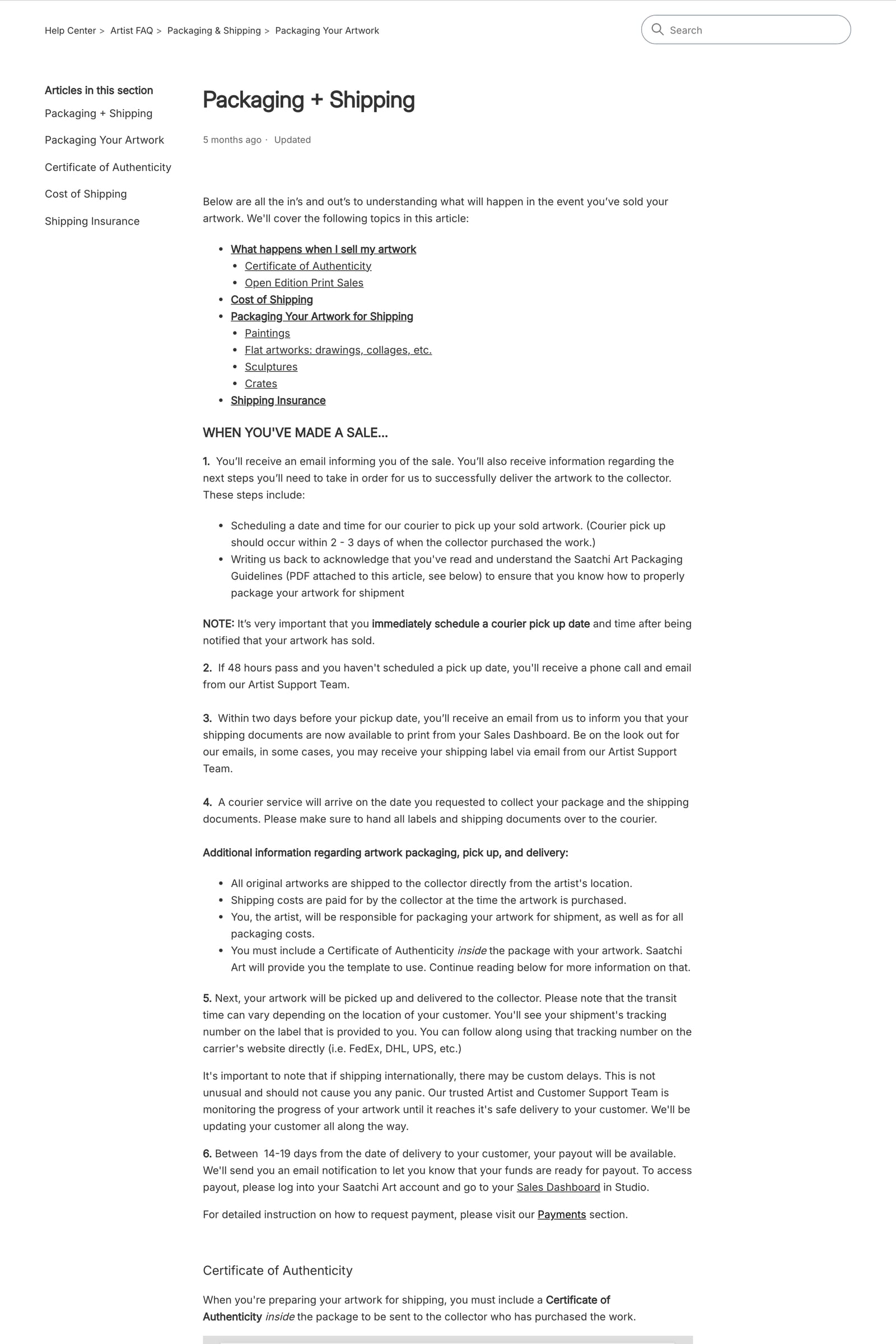
So the crate at midnight is still the artist's, and so is the haggling. What a marketplace removes is having to arrange any of it: the account, the label, the payment, the person who answers when something goes wrong.
Neither touches the second problem. Listing yourself on a marketplace is still publishing your own price under your own name, and still, when an offer arrives, deciding in public what you will take for the work. It is tidier than a DM. It is the same act.
That distinction is the whole reason these two sites feel different from a gallery when you browse them, and it is worth carrying with you. You are not comparing two websites. You are comparing two populations of artists who agreed to different terms.
Who each platform lets in
Saatchi Art is open to any artist, and closed to everyone else. Its artist policy is explicit: "We do not currently support accounts for galleries, collectives, or third parties selling on behalf of artists." Artists confirm they made the work and verify their identity during onboarding. That is exactly why my own gallery never seriously considered it. We were not eligible, not merely unsuited. If you buy there, you are buying from an artist who decided to sell, not from a gallery that decided to represent.
Artfinder requires an application. Four to six works, according to its seller documentation, plus evidence of an existing online presence, ideally a website of the artist's own. It is a low bar compared to gallery representation and a real one compared to open registration. Somebody looked, once, before the work went up.
The money is close enough that it should not decide anything for you. Saatchi Art's help centre states plainly: "If you sell an original work, Saatchi Art will receive a 40% commission on the artwork price." Artfinder's commission and fees policy puts its own commission at 40 or 45 percent depending on the plan the artist is on. Those numbers land in roughly the same place, and both are below a gallery's half.
What that tells you as a buyer is small but real. A forty percent cut is survivable for an artist who is not paying a gallery as well, and unattractive to an artist whose prices are already set by a gallery relationship. The artists you will not find on either site are largely the ones already inside that system.
What happens if you change your mind
This is where the two genuinely differ, and where most comparisons of them are wrong, including the version of this article I nearly wrote.
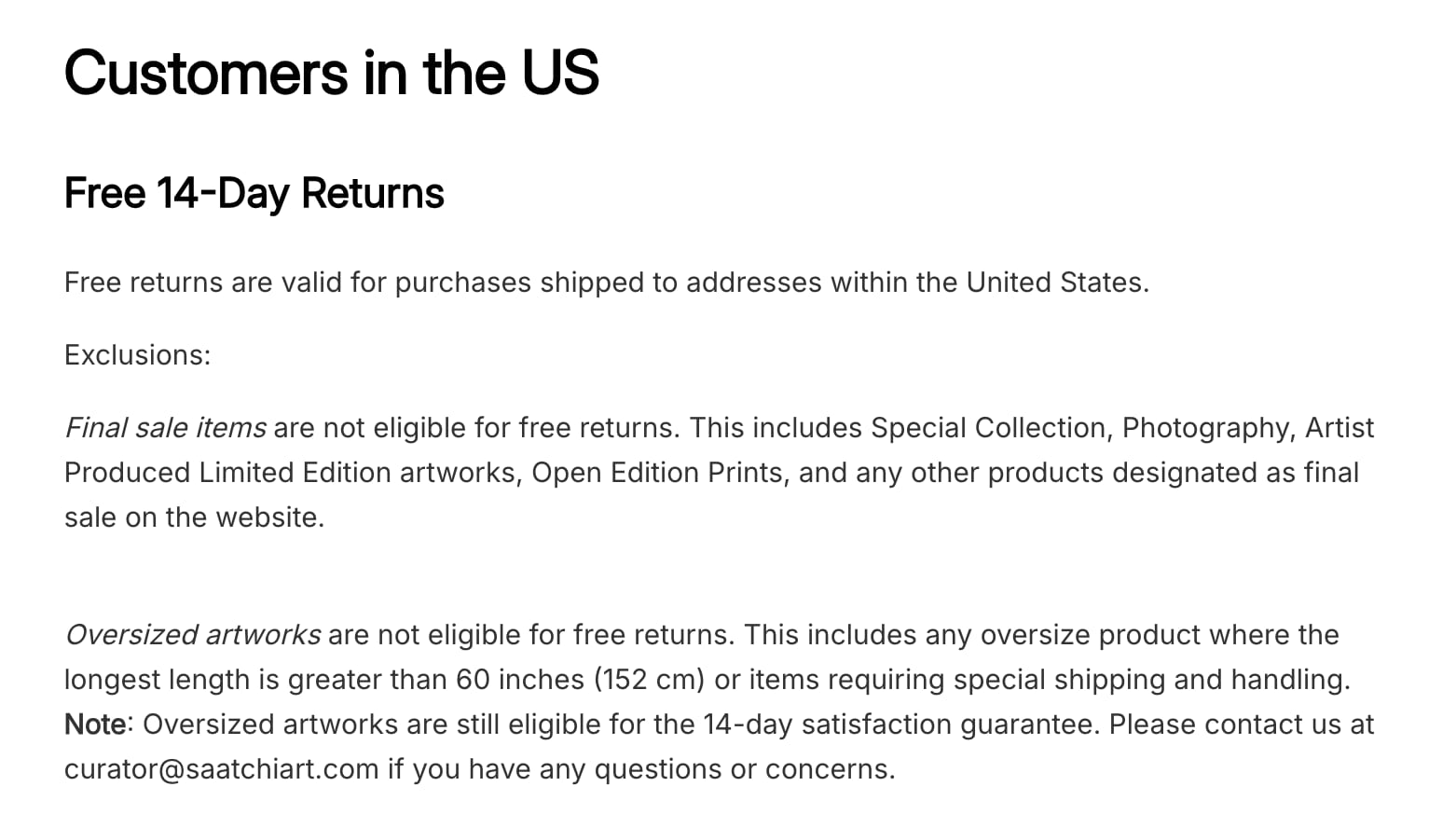
Saatchi Art's return policy is split by geography. If your delivery address is in the United States you get free fourteen day returns. If it is not, you get a fourteen day satisfaction guarantee instead, and your options are store credit for the full price or a refund to your card less a twenty percent processing fee.
That twenty percent turns up in a lot of writing about Saatchi Art with no mention of which customers it applies to. If you are reading this from a US address, it does not apply to you.
What does apply to you is the exclusions, and they are substantial. Saatchi Art lists Special Collection works, photography, artist produced limited editions and open edition prints as final sale, not eligible for free returns. So is anything oversized, defined as a longest side over sixty inches, though oversized work is still covered by the satisfaction guarantee. Commissions and frames are final sale too. Nothing is returnable once it has been stretched, cropped or altered.
Read that list again with a real purchase in mind. Photography is a common first buy. Limited editions are a common first buy. Both are outside the free return policy on Saatchi Art, and a buyer who assumed "free 14-day returns" covered the whole site would find that out at the worst possible moment.
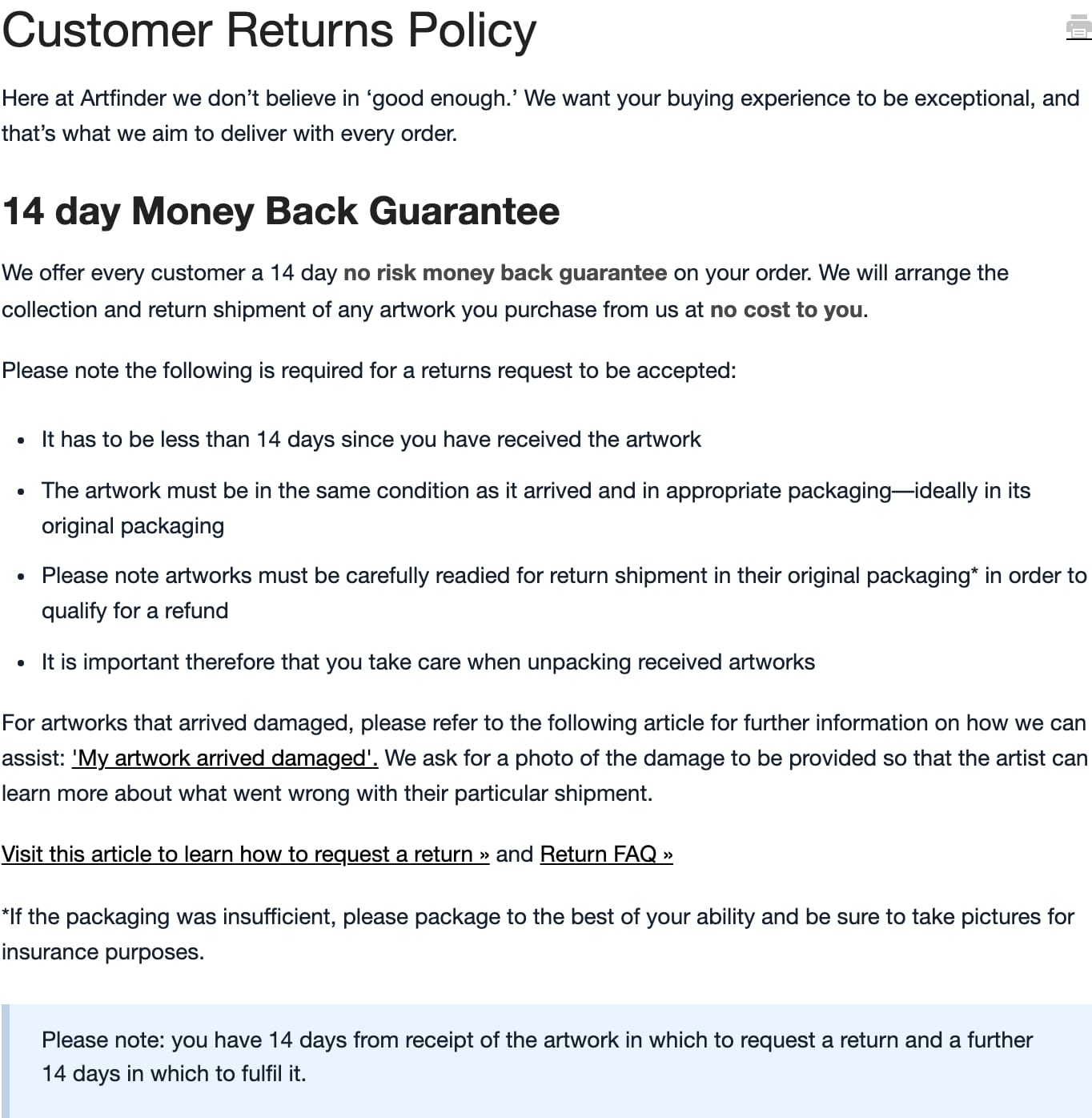
Artfinder's published policy is simpler. Fourteen days from receipt to request a return, a further fourteen to complete it, and the platform arranges and pays for the collection and return shipping. Its policy page lists no category exclusions. I want to be careful here: a policy page not mentioning exclusions is not the same as a guarantee there are none, and I have not tested a return. But as published, it is the more straightforward of the two.
Keep the box
Both platforms require the work to come back in its original packaging, and this catches people.
Artfinder puts it in the policy itself, warning that artworks must be readied for return in their original packaging to qualify for a refund, and telling buyers to take care when unpacking. Saatchi Art requires return shipments to be arranged through it and shipped in the original packaging, including every certificate that came with the order.

Nobody tells you this before the crate arrives, when you are excited and holding a knife. If you are unsure about a piece, open it slowly. Keep the packing materials, and keep the paperwork with them. It is the most practical thing in this article, and it costs nothing.
Which one, and when
If you want the widest possible choice and you are confident in your own eye, Saatchi Art has more work on it and open listing is the reason why. Just check whether the specific piece is in a final sale category before you decide the return policy protects you, because for photography and editions it does not.
If you would rather someone filtered a little first, and you want the return terms to be simple, Artfinder's application step and its published returns policy both point that way. You are trading catalogue size for a slightly narrower door.
If neither feels right, that is a useful answer rather than a failure to choose, and these two are not the only doors. The same question sorts the others. Singulart and The Artling both filter before listing, one through a curatorial review, the other through consultants who work mostly with interiors. Artmajeur does not filter at all, which is how it got so large.
Artsy is the odd one out. It is built around galleries rather than artists, which is why it was the one my own gallery actually had a conversation with. The work there is already inside the representation system the other sites sit outside of. The prices show it.
The question underneath all of this is not which website is better. It is whether you want to buy from an artist or from someone who chose that artist first. Both are legitimate. They are not the same purchase, and the price difference between them is mostly the cost of that choice.