Why Gallery Art Is So Expensive, From Someone Who Priced It
A gallery takes half of every sale. I ran online sales for one, and the answer is not what the gallery does for the painting in front of you. It is the ninety that never sold.
There is a specific face people make in a gallery when they hear a price.
It is not shock. Shock would be easier. It is a very small, very controlled nod, the kind you give when someone tells you their child is studying abroad. The eyebrows do not move. Then they say something like "ah, I see," and take one step back from the painting, and you know the conversation is over.
I saw that face a lot. For a few years I ran online sales for a small contemporary gallery in Korea, which meant I photographed the work, wrote the listings, answered the emails, and quoted the prices. Nobody ever said "that's too expensive" out loud. They are far too polite for that. But everyone was thinking some version of the same question, which is the question I want to answer here.
If the artist would sell you this painting for less, and they usually would, why does the gallery cost more?

The number nobody says out loud
The gallery takes fifty percent.
That is not a secret and it is not unusual. It is roughly the standard split across most of the industry. The artist names the price they want, we put the work on the wall, and when it sells the money is divided in half.
I understand why this sounds indefensible. The artist spent three months on the canvas. The gallery hung it on a wall. Fifty-fifty seems like a joke with a bad punchline.
I thought so too, in my first month. Then I started tracking where the other half went.
The photograph is the whole business
Here is something people outside the art world do not know: when you sell art online, the photograph is the product.
Nobody is buying a painting. They are buying a JPEG and hoping the painting behind it is better. Every decision they make happens through that image. Whether the blue reads as warm or cold, whether the brushwork looks confident or hesitant, whether the whole thing feels like something they want in their living room at seven in the morning. All of it is carried by one photograph taken under lights that are never quite right.
We did not have a staff photographer. Most small galleries do not. So this fell to me, and it was, by a wide margin, the most expensive part of the job in hours.
Some artists sent us beautiful files. Some sent us a phone snapshot taken at an angle, in a studio with a yellow bulb, with the corner of a chair in the frame. I want to be fair to them here. They are painters, not photographers, and nobody ever taught them this. But there is no version of that image that sells a two thousand dollar painting, and re-shooting means arranging a day, transporting work, setting up lights, and then hours of correcting color against the actual canvas sitting next to my monitor.
And after all of that, I want to be honest about something the industry does not like to admit: the photo never matches the real thing. Not once. Not even when I got it right. Oil sits on a canvas with a physical thickness that a screen cannot reproduce, and there is always a small gap between what the buyer imagined and what arrives. Managing that gap is most of what the listing text is doing.
Multiply that by every piece. Then add the detail page, the translation into English, the inquiry emails, the packing, the courier arrangements. That is where the afternoons went.
The ninety that do not sell
But none of that is the real answer. This is.
For every hundred works we put online, something like ten sold. Sometimes fewer. It varied enormously by artist, and the ones with an existing following moved much faster, but the shape of it held. Most work does not sell.
The gallery did the photography, the writing, the listing, and the answering for all one hundred. It got paid on ten.
That is the part that reframes the fifty percent, and it took me a while to see it. The commission on the painting you are looking at is not paying for the work done on that painting. It is paying for the ninety that are still sitting in storage, quietly costing money, generating nothing. The artist keeps their half of a sale and loses nothing on the failures. The gallery eats every one of them.
Eventually we would send the long-unsold pieces back, because we simply ran out of room. There is no elegant way to describe a storage problem. It is boxes, and then more boxes, and then a conversation with an artist that neither of you enjoys.
Why we hid the artists' Instagram
I will tell you something that does not make the gallery look good.
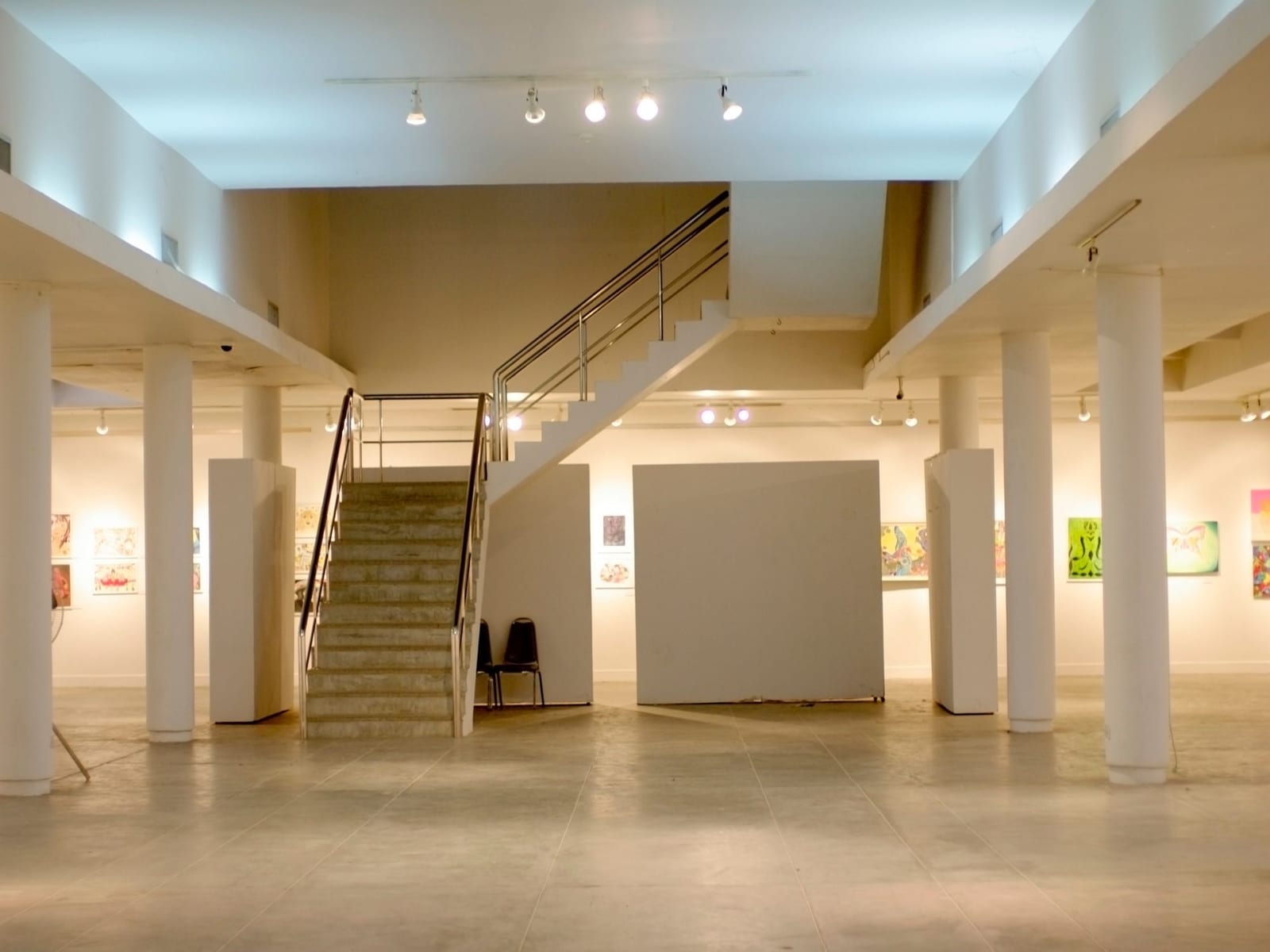
We deliberately did not display artists' contact information in the exhibition space. No Instagram handles on the wall labels. It was a policy, and it was a policy because people were finding the work with us and then contacting the artist directly.
A lot of people. Enough that we talked about it.
I understand the impulse completely. You are standing in front of a painting, you like it, and the math is obvious. Same painting, half the price, and the artist gets more. It looks like everybody wins except the middleman who did nothing.
The trouble is that the gallery is the reason you are standing in front of it. Somebody selected that work out of hundreds, gave it a wall, lit it, photographed it, wrote about it, and paid to put it in front of you. If that cost is routinely routed around, the selecting and the lighting and the photographing stop happening, and then you are back to scrolling through an unfiltered feed of everything, which is exactly the problem galleries exist to solve.
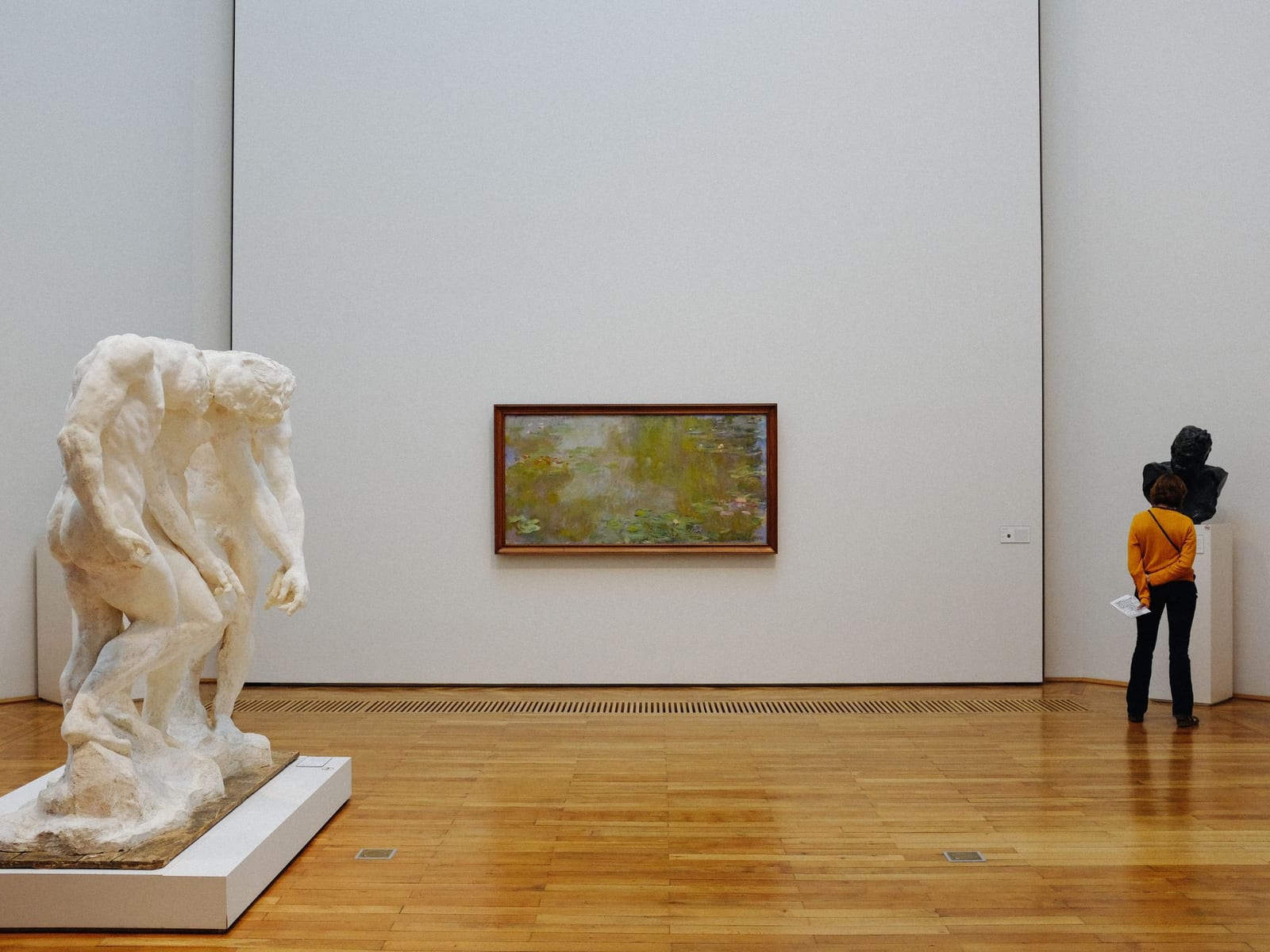
Whether the artist gives you a discount is entirely up to them, by the way. Some hold their prices steady across every channel because they think it is only fair. Some do not. There is no rule.
The month we had two prices
The worst version of this problem was one we caused ourselves.
We listed work on an outside online channel as well as selling from the gallery. At some point that channel ran a promotion, on its own schedule, without telling us. So the same painting was suddenly cheaper on a website than it was on the wall a few steps away from the person asking me about it.
That is a genuinely terrible position to be in with a customer standing right there. We smoothed it over by including installation service, which people appreciated, and which cost us a fair amount. It worked. It should never have been necessary.
I bring it up because price differences between channels usually look like someone getting greedy, and sometimes they are. Often it is just two systems failing to talk to each other, and the person in front of you absorbing the difference.
What you are actually buying
So what does the fifty percent get you, concretely?
A certificate of authenticity, signed and documented. Someone who inspected the piece before it shipped. If we found a problem, and we sometimes did, we told the buyer, sent it back to the artist for repair, and delayed the shipment rather than sending damaged work quietly.
And now the honest part, because I said I would be honest. Our returns policy was no returns. That is common with original work and I am not going to defend it as buyer-friendly. We also did not insure shipments. Instead we spent the money on packing, using a specialist firm for anything going overseas, wrapping pieces in layers I can only describe as excessive. It never failed on us. That is not the same thing as it never failing.
You should ask about both of these before you buy anywhere, including from a gallery. Especially from a gallery, honestly, since the price is higher.
So should you go direct?
Sometimes, yes.
If you already know the artist's work, you have seen it in person, you are comfortable arranging shipping and resolving any problems yourself, and the artist is happy to sell to you, then go direct. You will pay less and the artist will earn more. I am not going to pretend otherwise.
What you give up is the part that is invisible until it fails. Someone who checked the piece. Someone who packed it properly. Someone whose phone number you have when it arrives and the color is wrong.
The fifty percent is not the gallery valuing its labor at the same rate as the artist's. It is the price of the ninety paintings that never sold, spread across the ten that did.
That is a strange thing to be paying for. But once you see it, the number stops looking like a joke.