How to Buy Original Art When a Famous Name Costs the Same
How to buy original art online at a first-original budget, where the real choice is not an original by a lesser known artist against a print by a famous one. It is an original against a reproduction, and the two are not the same purchase.
I spent a few years telling people to buy the original rather than the print. I was saying it on behalf of a gallery whose stock was originals.
Those two sentences sat next to each other for the whole time I was there and I did not look at them properly until afterwards. The advice was not dishonest. I believed it, I still mostly believe it, and I would give it again today. But it happened to be the advice that pointed at what we had on the wall, and I was the one giving it.
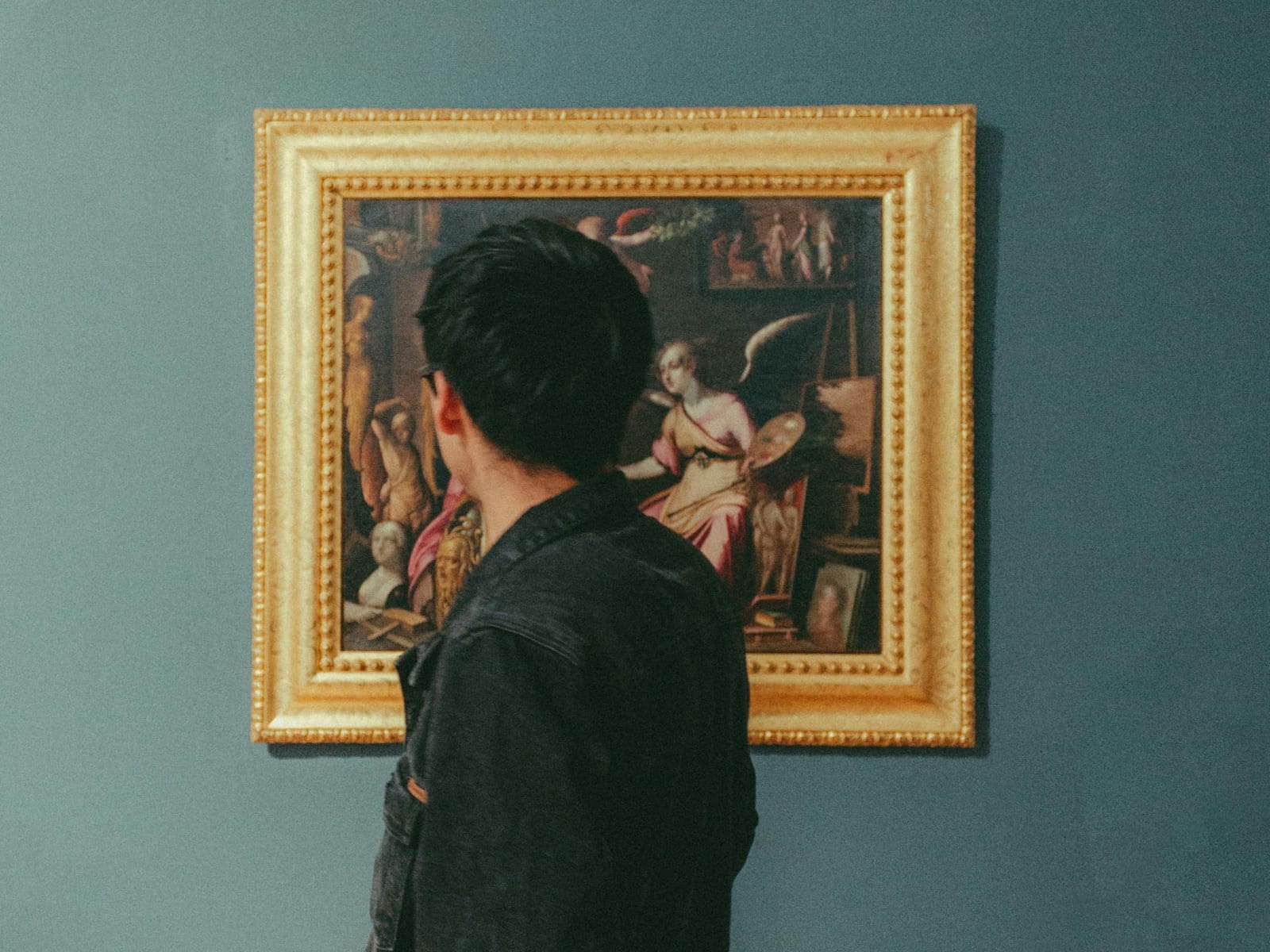
The question came up often enough that I stopped being surprised by it. Someone would be looking at a painting they liked, by an artist they had not heard of, and would ask whether the same money would be better spent on a print by a name they knew.
What I want to do here is answer that question properly, which means first admitting the customers were making a reasonable point. If two things cost the same and one of them is by a far better known artist, wanting the better known one is not naive. It is how almost every other purchase works.
What people think they are choosing between
The way the question gets asked is original against print. That framing is close but slightly wrong in a way that matters.
Start with the artist. The people whose work I was selling were not unknown. That word gets used loosely in writing about art buying, and it flattens a real distinction. These were artists with exhibition histories, gallery representation and some level of following, who were simply not superstars. There is an enormous middle of the art world between a graduate selling from an Instagram account and someone whose name is on the side of a museum, and that middle is where almost everything at a first-original budget actually comes from.
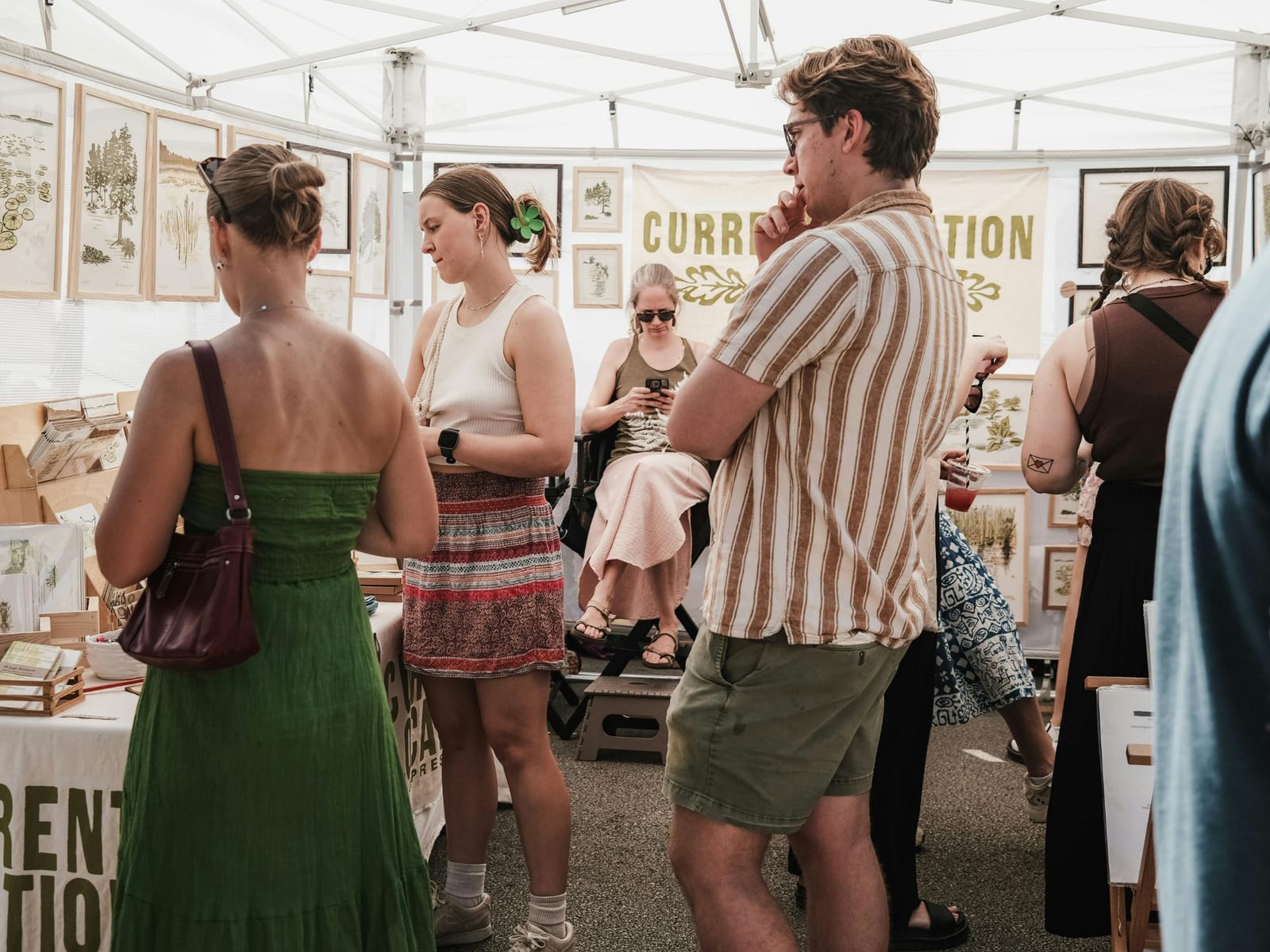
So the choice is not obscurity against fame. It is degrees of recognition, and one of the degrees is very expensive.
Now the other half. The word print is doing too much work in that sentence, and this is where the real problem is.
There are three things, not two
A seller can hand you three different objects and call all of them art, which they are, and two of them prints, which they also are. They are not equivalent, and the difference is not obvious from a listing photograph.
The first is a unique work. A painting, a drawing, a sculpture. One of them exists.
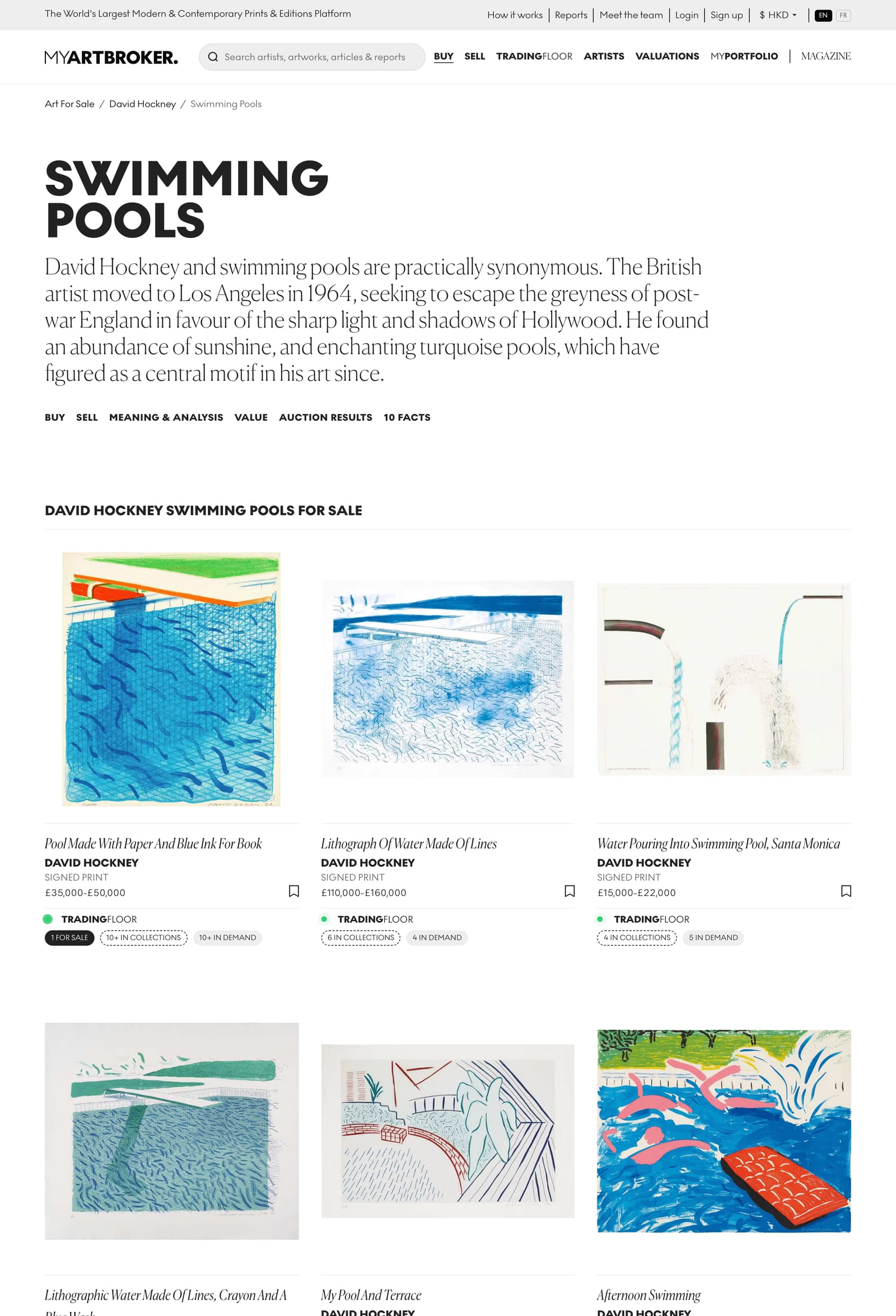
The second is an original print. An etching, a lithograph, a screenprint, a linocut. The artist made the printing surface itself, by hand, as the work. An original print is an original artwork, not a copy of one, and a Hockney lithograph of a swimming pool belongs in this category rather than the next one. Editions of these run to dozens or a few hundred.
The third is a reproduction. An existing painting is photographed or scanned, then printed, usually as a giclée. artbusiness.com, which has been publishing on this for years, is direct about what most of them are in its piece on giclée prints, calling the great majority "nothing more than digital reproductions or copies of scans or photographs of paintings, watercolors, drawings, or works of art in other mediums".
The reason this catches people is that reproductions are sold with the vocabulary of the second category. Limited edition. Hand signed. Numbered. Certificate included. Every one of those phrases is true and none of them changes what the object is. The same page puts the artist's actual involvement plainly. "The artists' only participation is typically to sign their names and number the prints which takes maybe thirty seconds or a minute or so per print", it says, and the printing and publishing companies do the rest.
Thirty seconds. That is what the signature on a signed limited edition reproduction is certifying, and it is worth knowing before you decide what it is worth to you.
None of this makes reproductions bad. A good giclée of a painting you love, framed well, is a genuinely nice thing to own and costs a fraction of the work it copies. It is only a problem when you paid for one thinking you were buying the other.
What a famous name costs at this budget
Take Hockney, since he is the name that came up most often and the market in his prints is unusually well documented. He died in June 2026 at eighty eight, and the dealer guide below was updated after that, so these are current figures rather than numbers left over from when he was still working.
The dealer myartbroker publishes a buyer's guide to his prints which states the range in one line: "David Hockney print prices range from under £10,000 for early portfolio works and posters to £600,000+ for his most sought after prints and complete sets."
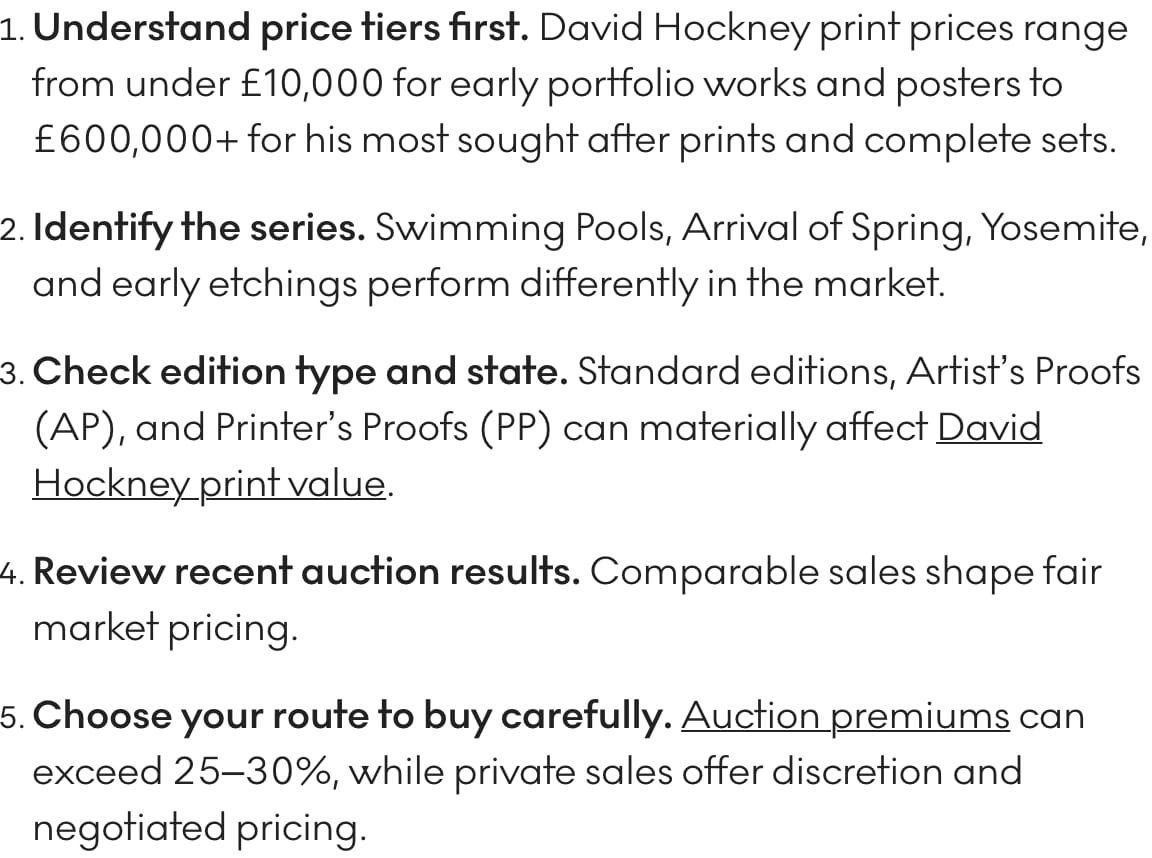
Which does not mean you cannot own something with his name on it at that price. It means you need to know what the thing will be. The same guide separates that category out: "Exhibition posters and unsigned works form a separate category within the Hockney print market. While they do not carry the same long-term resale potential as numbered editions, original period posters can provide an accessible entry point for new collectors."
I should be fair to that lower tier rather than dismiss it. The guide puts early etchings and individual prints from larger portfolios in it as well as posters, so it is not only reproductions down there, and an original period exhibition poster is a real object with a real history in its own right. But it is a different purchase from a signed edition, and the guide is careful enough to add that buyers should "distinguish clearly between original exhibition posters and later reproductions", which is the same warning again from the other direction.
So at this budget the choice people believe they are making, an original by a less famous artist against a print by a famous one, is usually not the choice in front of them. The real choice is an original artwork against a reproduction of somebody else's.
The pattern I could not stop noticing
Here is the part that is mine rather than researched, with the limits attached. I ran online sales for one small contemporary gallery in Korea, over a few years, in one market. This is a pattern I watched rather than a study, and other markets may sort differently.
The people who had bought a lot of art before bought the originals. Not out of principle, as far as I could tell, and not because anyone talked them into it. They looked, something held them, and they bought it. Whether the artist was widely known did not appear to enter the decision. My reading of that, and it is a reading rather than something anyone said to me, is that they already trusted their own reaction and so had nothing else to look for.
The people buying their first piece, or buying without much confidence in their own eye, wanted the name.
I do not think that was a mistake exactly, and I want to be careful here, because the easy version of this article says the beginners were wrong and the experienced buyers were right, and that is not what I saw. They were solving different problems.
What the name is actually doing for you
If you cannot yet tell whether a painting is any good, a famous name answers that for you. Somebody else has already decided. The judgment has been made by the whole art world over decades and you are buying a share of the conclusion.
That is not a silly thing to want. It is insurance against being wrong in a purchase where being wrong feels embarrassing.The trouble is only that it is a very expensive way to buy that feeling, and at a first-original budget it does not even work, because what you can afford at that price is not the thing the art world reached its conclusion about. The reputation is attached to the paintings and the signed editions. It transfers to a poster of them much more weakly than the price tag suggests.
The experienced buyers were not braver. They had simply built the confidence somewhere else, over time, by looking at a great deal of art and noticing what kept pulling them back. That is the thing worth copying, and it is free.
What to check before you pay
None of the above helps unless you can tell which of the three things a listing is offering, which is often deliberately unclear. These are the questions worth asking, and they are the ones I was asked least often.
Ask what the object physically is, in plain words. Not the medium as marketing, the medium as fact. If a listing says limited edition print, ask whether the artist made the plate or the screen, or whether an existing painting was photographed. A seller who cannot answer that quickly is telling you something.
Ask for the edition line and what happened to the plate. A real edition has a number and a size, written on the work, and the printing surface is usually destroyed or defaced afterwards so no more can be made. Ask when it was printed. Ask whether the artist signed it before or after printing.
Ask to see the certificate before you pay rather than after. It should name who is standing behind the claim, and that should be the artist, the publisher of the edition, or an established dealer for that artist. A certificate signed by the seller, attesting that the seller believes the work is genuine, is a circular document.
Ask what happens if it arrives damaged, and then ask the follow-up, which is who pays. On Saatchi Art the work ships from the artist's own address and the artist packs it: "You, the artist, will be responsible for packaging your artwork for shipment, as well as for all packaging costs." Carrier claims for damaged art are refused on insufficient packaging more than on anything else, which means the quality of the box is not a detail.
And now the part that does not make my old employer look good, since I have asked you to interrogate other sellers. We did not accept returns. That is normal for original work and I am not going to defend it as generous. We also did not insure shipments. We spent that money on packing instead, using a specialist firm for anything going overseas, and it never failed on us, which is not the same as it never failing. Ask both of those questions of anyone selling you a first piece, including a gallery, and especially a gallery, because the price is higher there. I have written elsewhere about where that higher price actually goes.
Ask about size last, and then take it seriously. Every measurement in a listing is accurate and none of them are informative until you have put tape on your own wall. Work that looked substantial on a screen has a way of arriving small.
So which one
If you are choosing between an original by an artist with a real record who is not famous, and a reproduction of a famous artist's painting, buy the original. That is the same advice I gave from behind the desk and I am aware of how it sounds coming from someone who was paid on it.
But the reason has changed shape for me since. It is not that originals are more virtuous. It is that at this price the two things are not comparable objects at all, and the comparison was never really happening. One of them is a work of art. The other is a picture of one.
If what you actually want is the famous name on your wall, that is a legitimate thing to want and there is nothing wrong with a good reproduction bought knowingly and cheaply. Just do not pay original prices for it, and do not expect it to become something else later.
And if the honest answer is that you are not sure you can trust your own eye yet, the fix is not to borrow someone else's. Go and look at a great deal of art without buying any of it. The confidence the experienced buyers had was not a personality trait. It was accumulated, and it cost them nothing but attention.