What Lee Bae's Auction Record Tells a Buyer Who Cannot Afford One
Lee Bae's originals rose 89 percent in four years while his editions fell 14 percent. The gap between those two numbers is the most useful thing his record has to teach, and it applies to artists at any price.
Between January 2022 and August 2026, 433 works by Lee Bae sold at auction in Korea. The originals rose 89 percent over that stretch. The prints, measured on the same edition coming back to the room a second time, fell 14 percent.
Both numbers describe the same artist in the same four years. If you only read the first one you would reach the wrong conclusion about what to buy.
The bad news first
A Lee Bae original is not a small purchase. The median hammer price across those 312 original lots was 47,000 dollars. That is the middle of the range, not the top. Add the buyer's premium, which auction houses in Korea take on top of the hammer, and the real cost is higher again.
312 lots. Buyer's premium not included.
So if you came here weighing one up, that is the number to weigh it against.
Every figure here was recorded in Korean won and converted at 1,386 to the dollar, the rate on 9 September 2026.
The obvious next thought is the print. Lee Bae editions turn up constantly, they start around a few thousand dollars, and the name on them is the same. This is where the record earns its keep, because it says quite clearly that the substitution does not work.
What happened to the editions
Fourteen Lee Bae editions came back to auction more than twice in those four years. I tracked each one by matching title and dimensions, so these are the same image at the same size returning to the room.
Eleven of the fourteen sold for less the second time. Two held. One rose.
The worst of them is an offset print called Issu du Feu F07, at 70x50cm. It came up four times during 2022 alone. In March it took 772 dollars. By November it took 303. It lost 61 percent inside eight months, and the reason is visible in the sale dates rather than in anything about the print itself.
An Untitled edition at 63x45cm has appeared eight times. Brushstroke 187 has appeared seven. The more often an edition comes back, the harder the price gets pushed down, because the last hammer price is public and every bidder can see it.
There is a second thing buried in the print numbers, and it matters more than the first if you are actually shopping. Technique changes the price by an order of magnitude.
| Method | Lots | Median |
|---|---|---|
| Silkscreen | 30 | $6,100 |
| Piezography | 9 | $4,700 |
| Archival pigment print | 16 | $3,200 |
| Etching and carborundum | 15 | $2,700 |
| Offset print | 11 | $476 |
A silkscreen requires a separate screen for each colour and the artist is usually involved in making them. An offset print is a photograph of a finished painting, run through a commercial press. Both get sold as "a Lee Bae print," and one of them costs twelve times the other for reasons the listing rarely spells out.
The phrase "it's a Lee Bae print" is not a description of what you are buying. Ask which method, and if the answer is offset, you are buying a poster with a signature on it.
The originals, and why the 89 percent is softer than it looks
Now the good news, with its own qualification attached.
The median original went from 34,000 dollars in 2022 to 65,000 in 2026. That is the 89 percent figure, and I do not think it means what it appears to mean.
The mix of what came up for sale changed underneath it. In 2022, 49 of the 82 original lots were works catalogued simply as Untitled, which is the cheaper end of his output. By 2026 that had fallen to 9 out of 53. Take out a large block of low-priced work and the median rises whether or not anything actually got more expensive.
Hold the series and the size steady and the rise is real but smaller.
| Series and size | 2022 | 2026 | Change |
|---|---|---|---|
| Issu du Feu, 90 to 140cm | $101K | $152K | 50.0% |
| Issu du Feu, over 140cm | $209K | $231K | 10.3% |
| Brushstroke, 66x102cm | $55K | $112K | 103.9% |
| Brushstroke, 132x163cm and up | $122K | $231K | 89.2% |
Those are top prices within each band, not medians, so read them as the ceiling rather than the going rate.
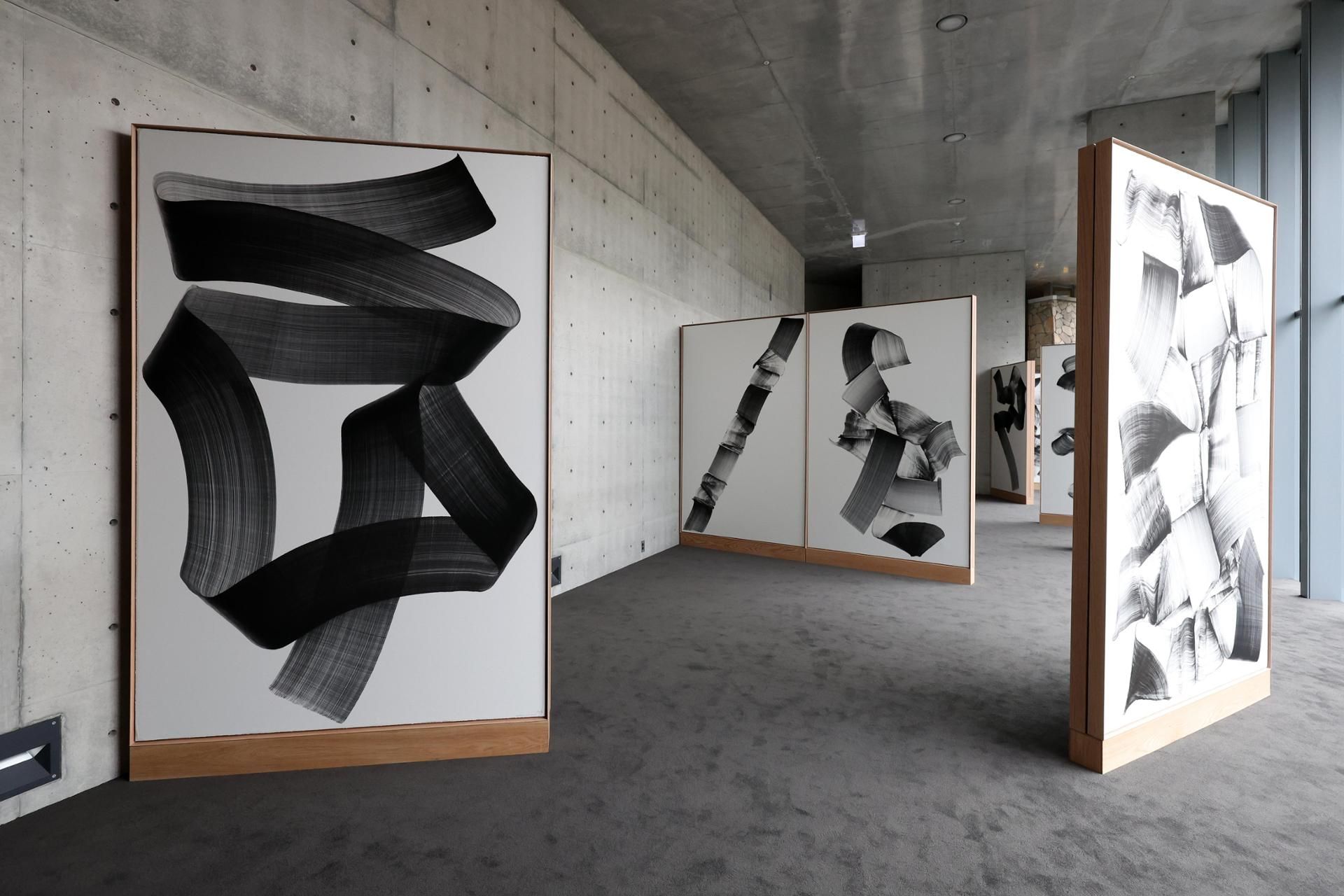
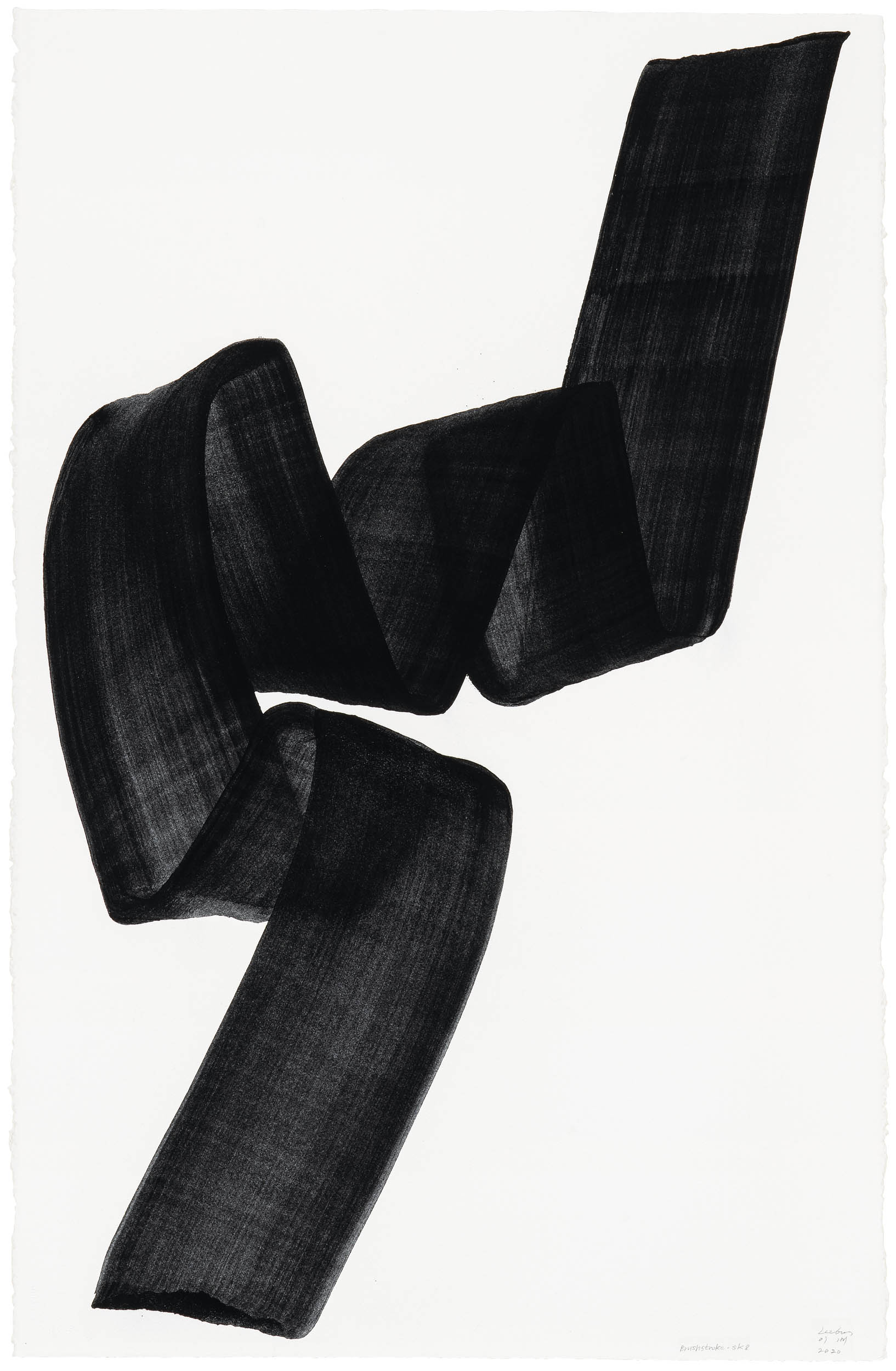
The interesting line is the third one. Brushstroke is the series of charcoal ink works on paper, and the ones reaching auction were made from 2019 onward. They arrived priced well below the Issu du Feu canvases, which are the charcoal block paintings he has been making since the 1990s. In July 2026 a Brushstroke took the top price of the year for the first time, at 231,000 dollars.
The one number that transfers
Six Lee Bae originals sold twice inside the four years, and every one of them went up. Brushstroke 13, a charcoal ink work on paper at 66x102cm, took 29,000 dollars in March 2023 and 55,000 in May 2026. Ninety percent in three years and two months.
Six is a small sample. It is worth mentioning because it points the same direction as the edition data, from the opposite side.
Here is the pattern under both. Lee Bae's originals are made one at a time and there are 312 of them across four years of a very active market. His editions exist in runs, and the same image comes back again and again, sometimes eight times in four years. Scarcity is not a quality of the artist. It is a quality of the specific object, and it is the thing that held one number up while the other slid.
That transfers to artists whose work you can afford. A living painter selling originals at 2,000 dollars is subject to the same mechanics as one selling at 47,000. If the same image exists in an edition of 200, the edition will behave like Lee Bae's editions, and the reason has nothing to do with how well known either artist is.
What the record does not tell you
It does not tell you whether the work is good. A page this full of percentages can quietly imply otherwise.
It also has real gaps. The Korean auction database I used, K-artmarket, only begins in January 2022, so nothing here says anything about what Lee Bae's work did during the Dansaekhwa boom of the mid 2010s. Reading 2022 as a floor would be an error.
Unsold lots are missing entirely. A record built only from works that found a buyer flatters every artist in it, and there is no way to tell from this data how many Lee Baes were offered and passed.
Estimates are absent from most of it. I could recover the auction house estimate for only 20 of the 433 lots, all from 2026 sales. In those twenty, the hammer came in at a median of 84 percent of the mid-estimate, and the three largest results landed exactly on the low estimate. That is a small window, but it is a useful corrective to the headline figures: the market has been setting records without exceeding what the houses expected.
Where to see one
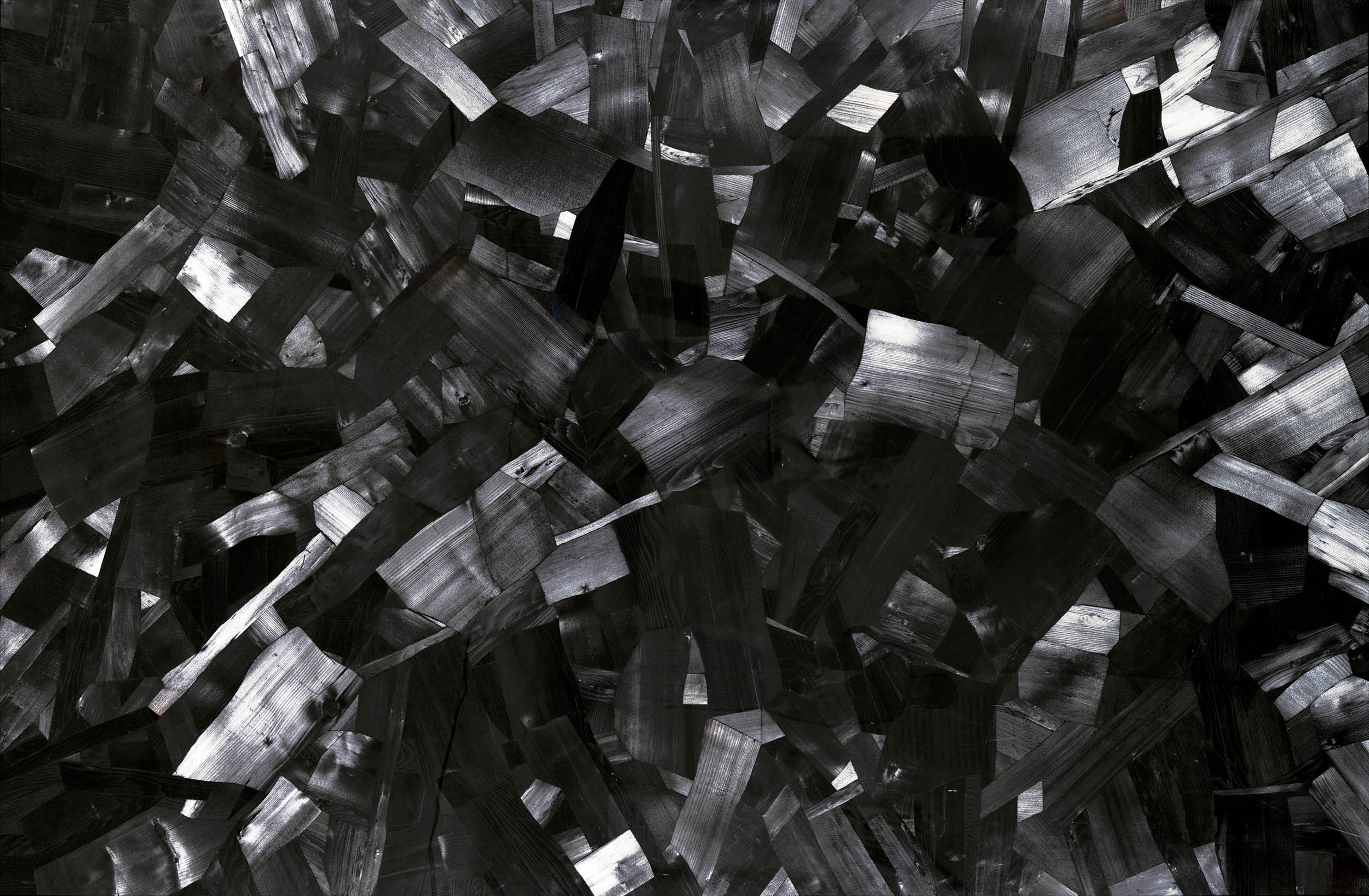
En attendant runs at Museum SAN in Wonju until 6 December 2026. The entrance holds an eight metre charcoal sculpture, and the lobby has sixteen Brushstroke works hung as a corridor.
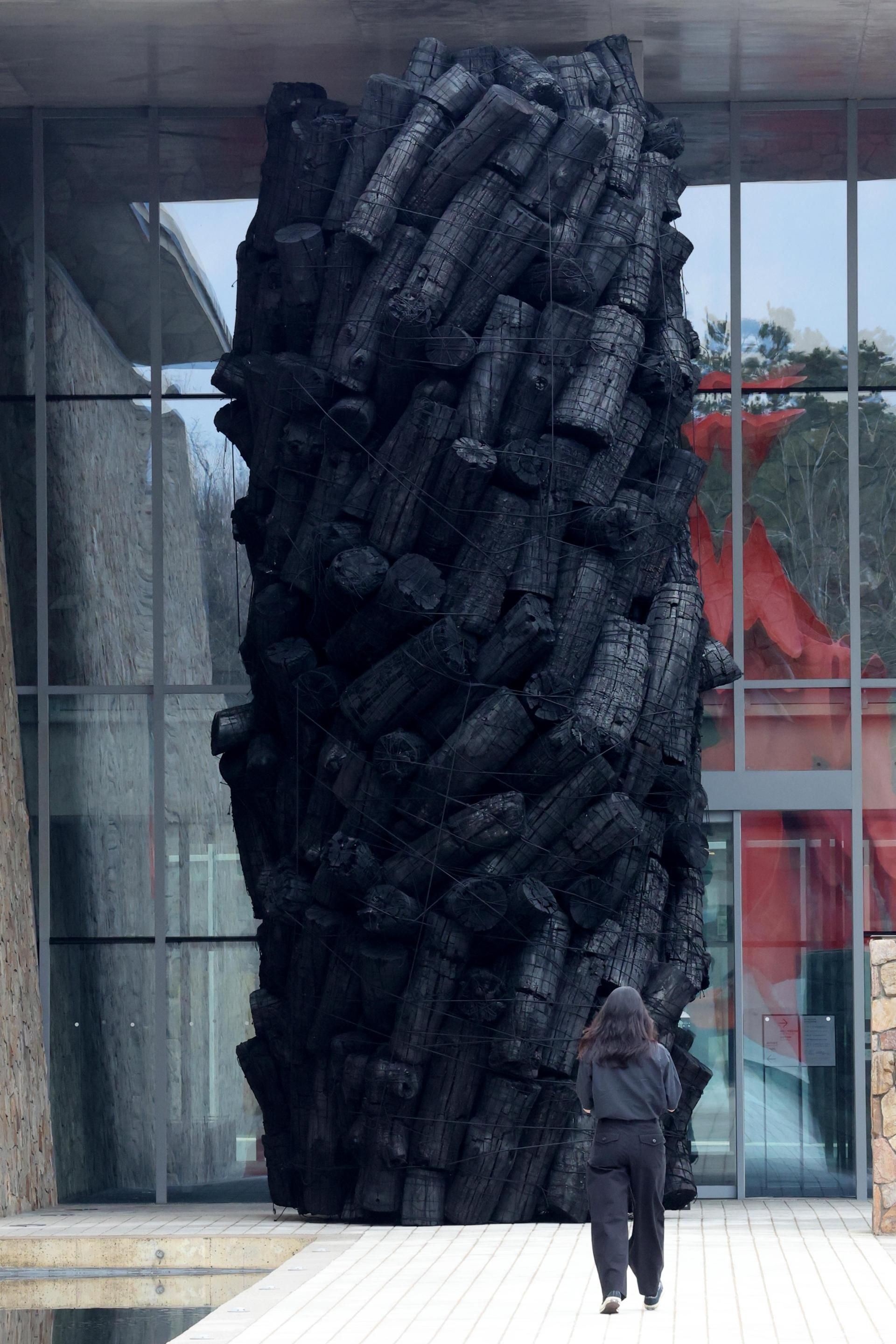
Go if you can. The one thing every number on this page fails to capture is that an Issu du Feu canvas has actual physical depth, charcoal blocks packed and then ground back, and it reads completely differently in a photograph than it does from a foot away. If you are going to form a view on whether this work is worth what the market says it is, that is where you form it.
Auction data from K-artmarket, 4 January 2022 to 26 August 2026. Hammer prices, buyer's premium excluded.