Park Seo-Bo Prices: A Korean Record That Has Stood Since 2021, and Prints That Keep Slipping
The ten highest prices Park Seo-Bo has made at Korean auction, his record abroad, and what 298 print and edition sales from 2022 to 2026 show about each kind of Ecriture print.
On 5 October 2023, Sotheby's Hong Kong sold Park Seo-Bo's Ecriture No. 37-75-76 for HK$20,415,000 with premium, about $2.6 million. It is still his auction record. The hammer fell at HK$16.5 million, below the low estimate of HK$17 million. Nine days later, on 14 October, Park died at 91. He had been ill with lung cancer.
In Korea his record is older. It was set at Seoul Auction on 26 October 2021, and the most expensive Park to sell in Korea since then made less. The same split runs through Kim Whanki: his record prices are all Hong Kong and New York sales, while Seoul buys a different part of the work. His prints, which account for most of the Park Seo-Bo lots that come up at Korean auction, have mostly sold for less than they did in 2022.
Park is hard to price from auction results alone. He was the central figure of Dansaekhwa, taught painting at Hongik University for three decades, ran the Korean Fine Arts Association, and painted one series, Ecriture, for more than fifty years. So this piece starts with who he was, and then looks at two things only: his ten highest Korean prices, and what his prints sell for.
Who he was
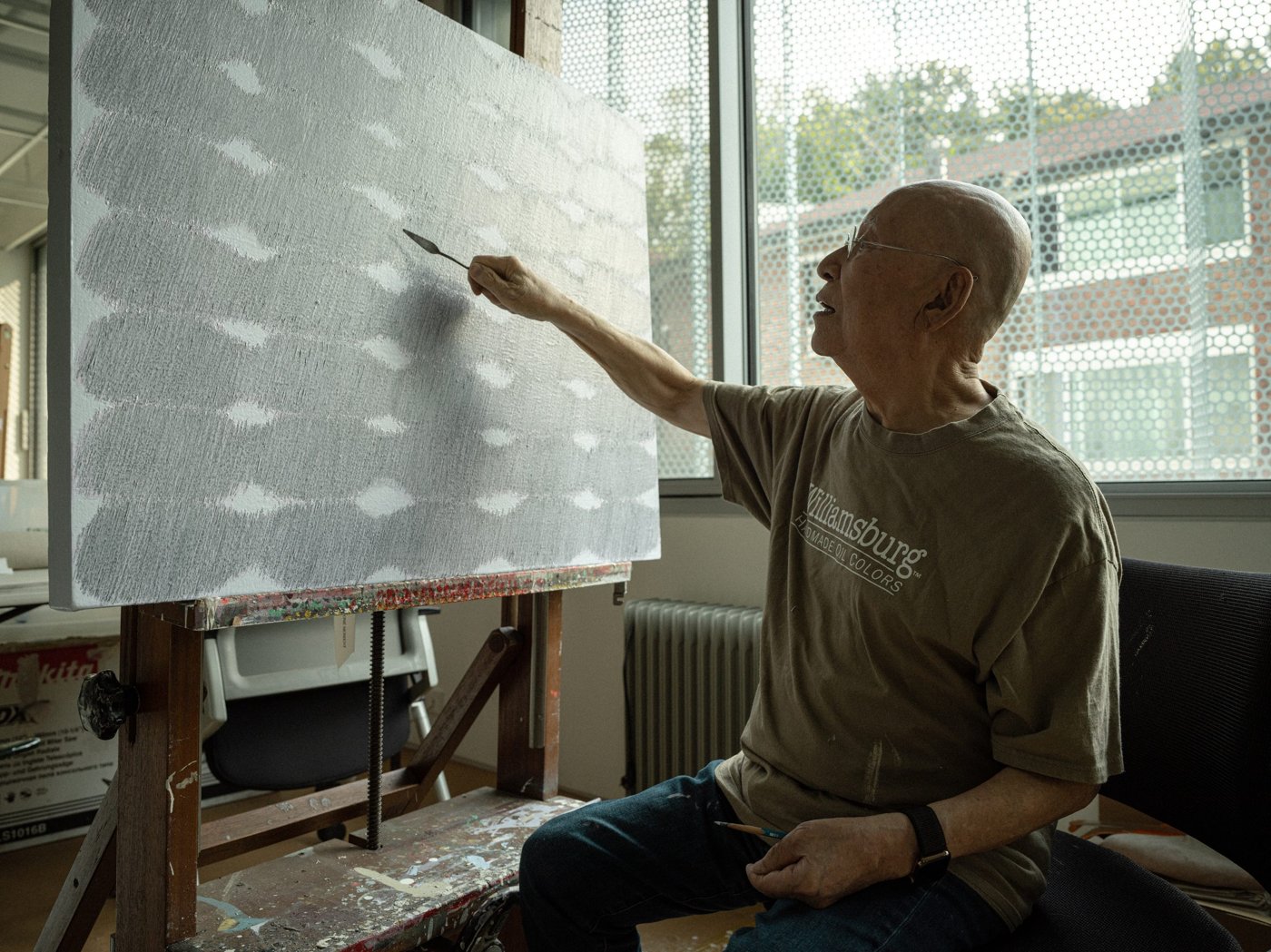
Park was born Park Jae-hong in Yecheon, North Gyeongsang, on 15 November 1931, and graduated in painting from Hongik University in 1954. In 1956 he was among the painters who publicly rejected the state-run National Art Exhibition, and in 1957 he became, in the words of the National Museum of Modern and Contemporary Art, Korea's first Art Informel painter.
Ecriture, called Myobeop in Korean, began in 1967. In a 2019 interview with Kukmin Ilbo, Park described watching his three-year-old son try to fit letters into the squares of his older brother's writing book, fail, and strike the page through with a slash. That act of giving up was the idea. For roughly two decades the series was pencil drawn over and over into wet paint. From the 1980s he laid softened hanji, Korean mulberry paper, mixed with paint onto the canvas and pushed it into ridges with tools. From the 2000s the ridges took on strong colour. He described the work as a practice for emptying himself.
In 1975 Tokyo Gallery showed him with four other Korean painters in Korea: Five Artists, Five Hinsek 'White', which the gallery describes as the first show in Japan given to contemporary Korean artists. Kukje Gallery's 2014 Dansaekhwa survey and the Dansaekhwa collateral exhibition in Venice in 2015 brought the movement to a wider market.
He taught at Hongik from 1962 to 1966 and again from 1970 to 1997, served as dean of its College of Fine Arts from 1986 to 1990, and chaired the Korean Fine Arts Association from 1977 to 1980. His standing drew criticism too, including that Dansaekhwa painters stayed silent under military rule in the 1970s. The Gwangju Biennale created a Park Seo-Bo Art Prize with his foundation, awarded it once in April 2023, and abolished it in May after protests.
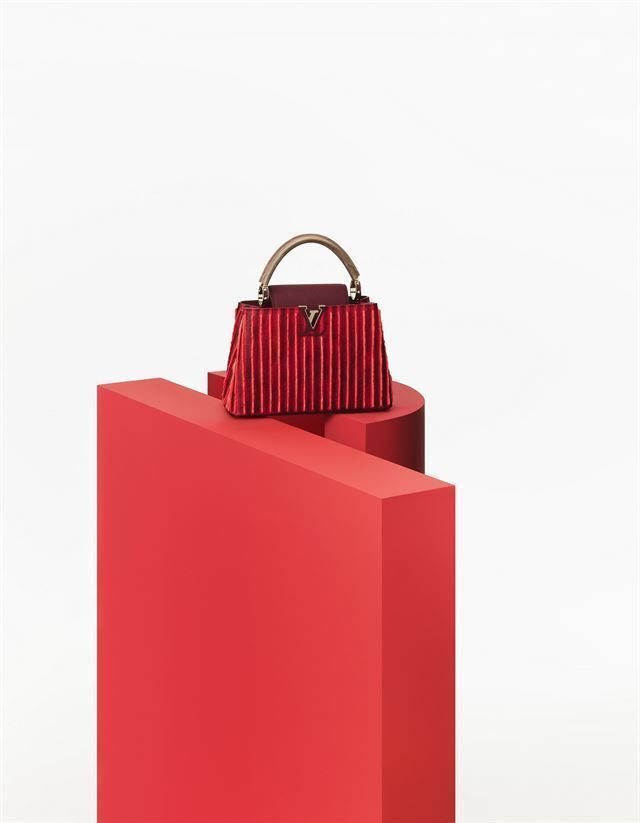
In 2022 Louis Vuitton made him the first Korean artist in its ArtyCapucines series, in which artists redesign the Capucines handbag. His version, based on a red Ecriture painting from 2016, was made in an edition of 200.
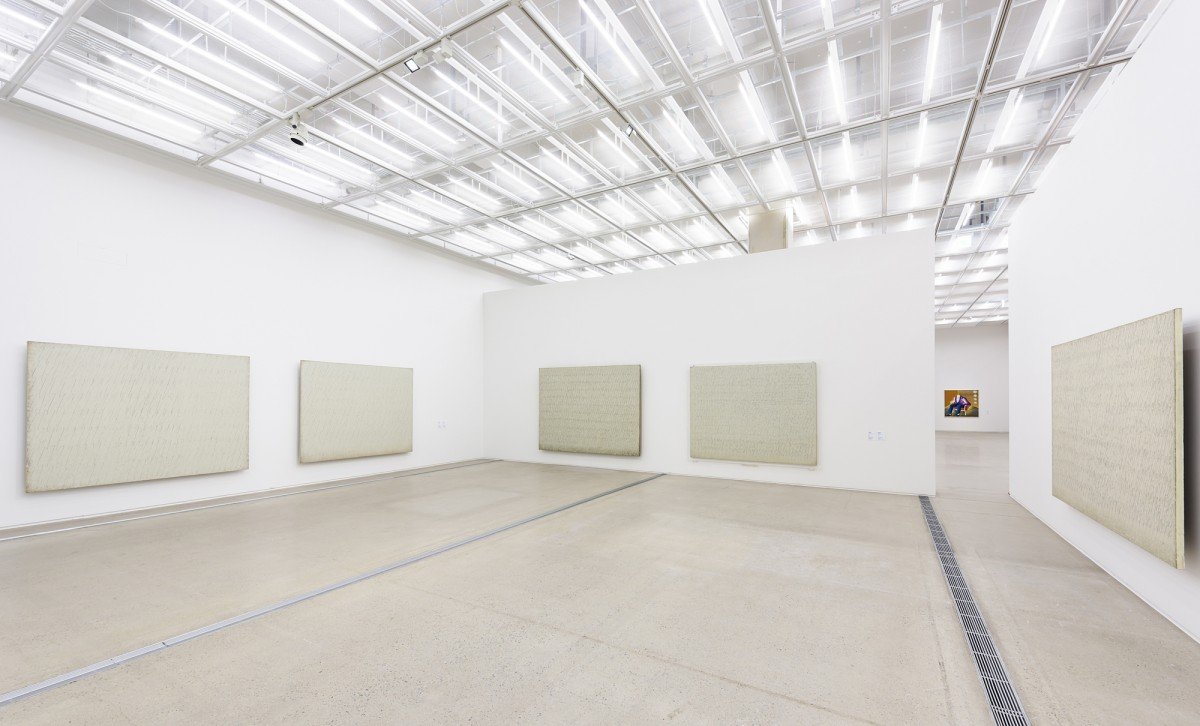
The National Museum of Modern and Contemporary Art held his retrospective in 2019. The Guggenheim holds Ecriture No. 55-73 (1973), and his work was shown in its Marking Time in 2019 and in LACMA's The Space Between: The Modern in Korean Art in 2022. On 21 August 2026 the Park Seo-Bo Museum opened in Yeonhui-dong, Seoul.
The ten highest prices in Korea
These are hammer prices at sales Seoul Auction and K Auction held in Seoul, buyer's premium excluded. Sales both houses held in Hong Kong were in Hong Kong dollars and are left out. A painting that sold twice is counted twice.
| Rank | Price | Work | House | Sale |
|---|---|---|---|---|
| 1 | $894,948 | Ecriture No. 200-86, 1986, pencil and oil on cotton | Seoul Auction | 26 Oct 2021 |
| 2 | $820,369 | Ecriture No. 1-81, 1981, pencil and oil on hemp cloth | Seoul Auction | 27 Sep 2016 |
| 3 | $790,537 | Ecriture No. 48-75-77, 1975 to 1977, oil and pencil on hemp cloth | K Auction | 22 Nov 2023 |
| 4 | $745,790 | Ecriture No. 10-78, 1978, oil and pencil on hemp cloth | K Auction | 22 May 2024 |
| 5 | $708,501 | Ecriture No. 1-79-81, 1979 to 1981, oil and pencil on hemp cloth | K Auction | 26 May 2021 |
| 6 | $671,211 | Ecriture No. 3-75, 1975, pencil and oil on canvas | K Auction | 28 Sep 2016 |
| 6 | $671,211 | Ecriture No. 23-77, 1977, oil and pencil on canvas | K Auction | 21 Mar 2018 |
| 6 | $671,211 | Ecriture No. 10-78, 1978, oil and pencil on hemp cloth | K Auction | 25 Mar 2020 |
| 9 | $611,548 | Ecriture No. 1-79-81, 1979 to 1981, oil and pencil on hemp cloth | K Auction | 23 May 2018 |
| 10 | $577,987 | Ecriture No. 213-85, oil and pencil on cotton | K Auction | 20 Dec 2023 |
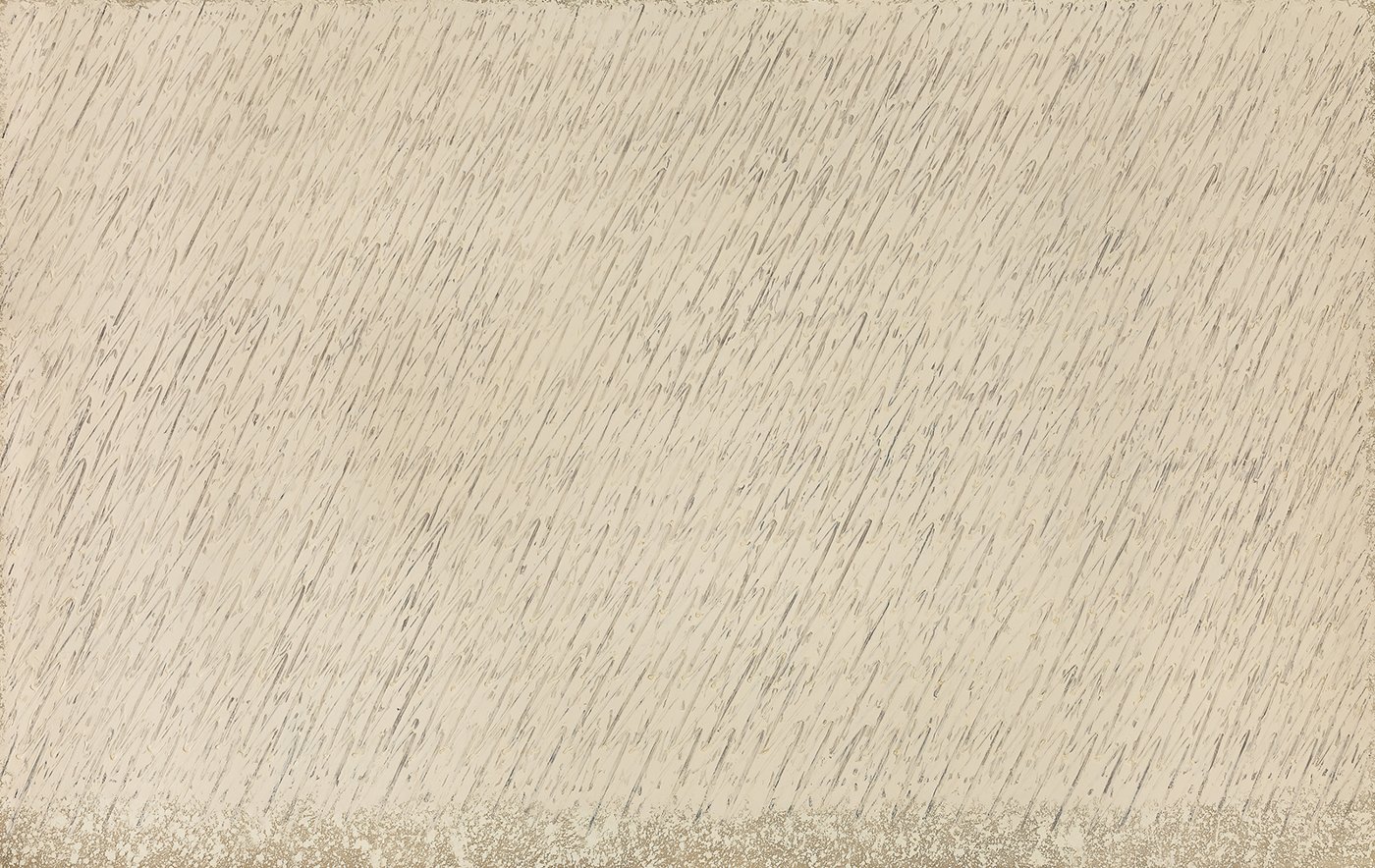
All ten are pencil paintings from the 1970s or 1980s. No painting known to be on hanji makes the list. The most expensive hanji works in the 2022 to 2026 records sold for $484,764 and $477,306, each more than two and a half metres across.
The same pictures keep returning. Ecriture No. 10-78, with the same year, size and medium both times, sold for $671,211 in 2020 and $745,790 in 2024; in 2024 it was offered at 1.1 billion to 2 billion won and hammered below the low estimate. Ecriture No. 1-79-81 appears in 2018 and 2021 with the same size and medium, though I have not compared its photographs. Ecriture No. 213-85 sold for $484,764 in June 2022 and $577,987 in December 2023, and the two auction photographs show the same painting.
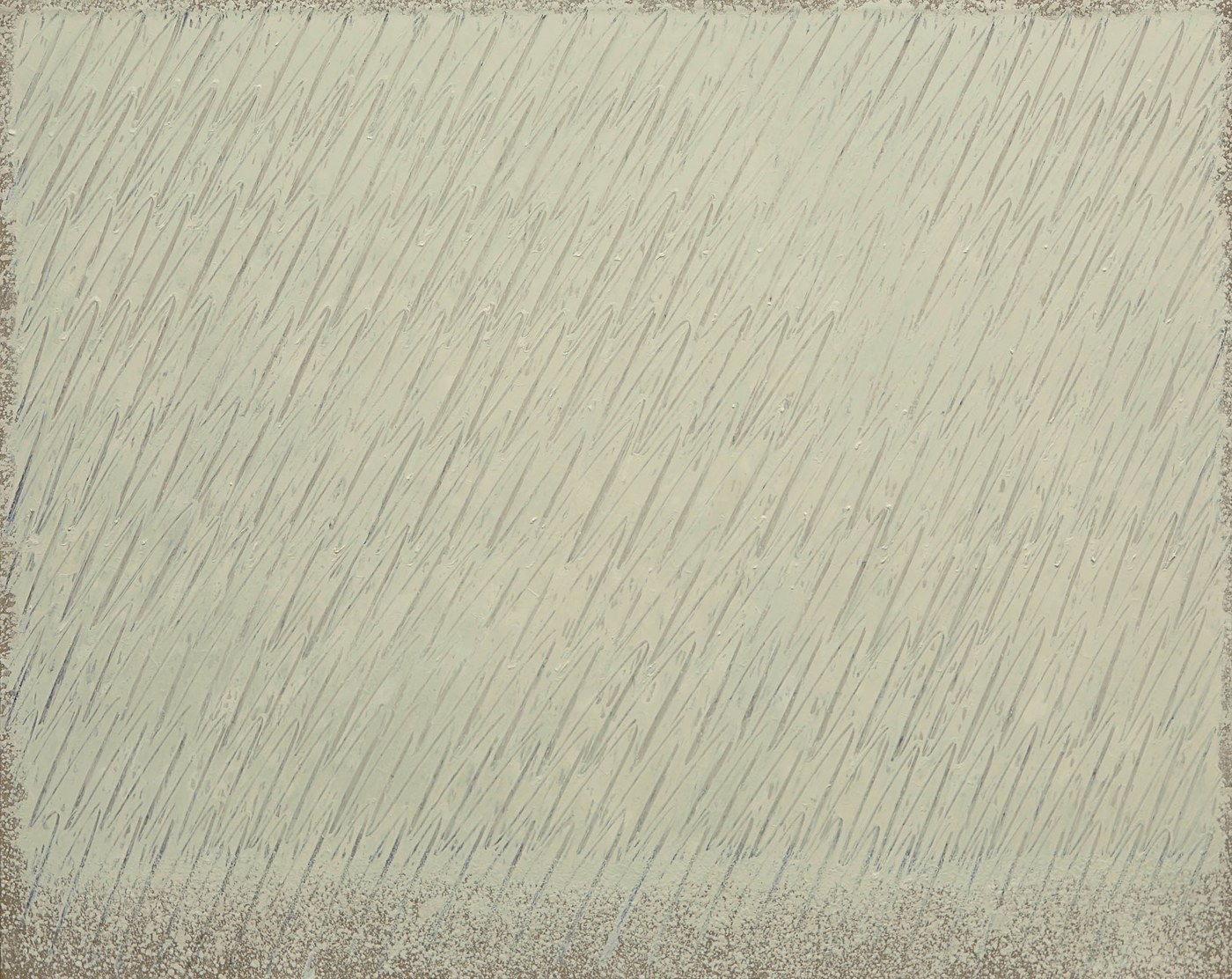
The Korean record has not moved since 2021. A month after his death, K Auction offered Ecriture No. 48-75-77 at 600 million to 1.5 billion won, and it made $790,537, short of the record.
The ten highest prices abroad
These are sales at foreign houses, with premium, converted at the rates below. Sales Seoul Auction and K Auction held in Hong Kong are left out.
| Rank | Price with premium | Work | Sale | Date |
|---|---|---|---|---|
| 1 | $2,603,525 | Ecriture No. 37-75-76, 1975 to 1976, oil and pencil on canvas | Sotheby's Hong Kong | 5 Oct 2023 |
| 2 | $2,078,739 | Ecriture No. 37-75-76, the same painting | Sotheby's Hong Kong | 31 Mar 2018 |
| 3 | $1,696,149 | Ecriture No. 38-75, 1975 | Sotheby's Hong Kong | 30 Sep 2017 |
| 4 | $1,308,458 | Ecritures No. 10-79-83, 1979, reworked 1983, pencil and oil on hemp cloth | Christie's Hong Kong | 27 May 2017 |
| 5 | $1,212,500 | Ecriture No. 45-75, 1975, oil and graphite on canvas | Sotheby's New York | 18 May 2017 |
| 6 | $1,198,782 | Ecriture No. 65-75, 1975, oil and pencil on canvas | Christie's Hong Kong | 28 Nov 2015 |
| 7 | $1,034,906 | Ecriture No. 15, 1977, oil and pencil on canvas | Phillips Hong Kong | 8 Jun 2021 |
| 8 | $996,264 | Ecriture No. 15-76, 1976, pencil and oil on canvas | Christie's Hong Kong | 28 May 2023 |
| 9 | $986,859 | Ecriture No. 2-75, 1975, pencil and oil on canvas | Christie's London | 6 Oct 2017 |
| 10 | $931,989 | Ecriture No. 60-73, 1973, oil and pencil on canvas | Christie's Hong Kong | 28 Mar 2025 |
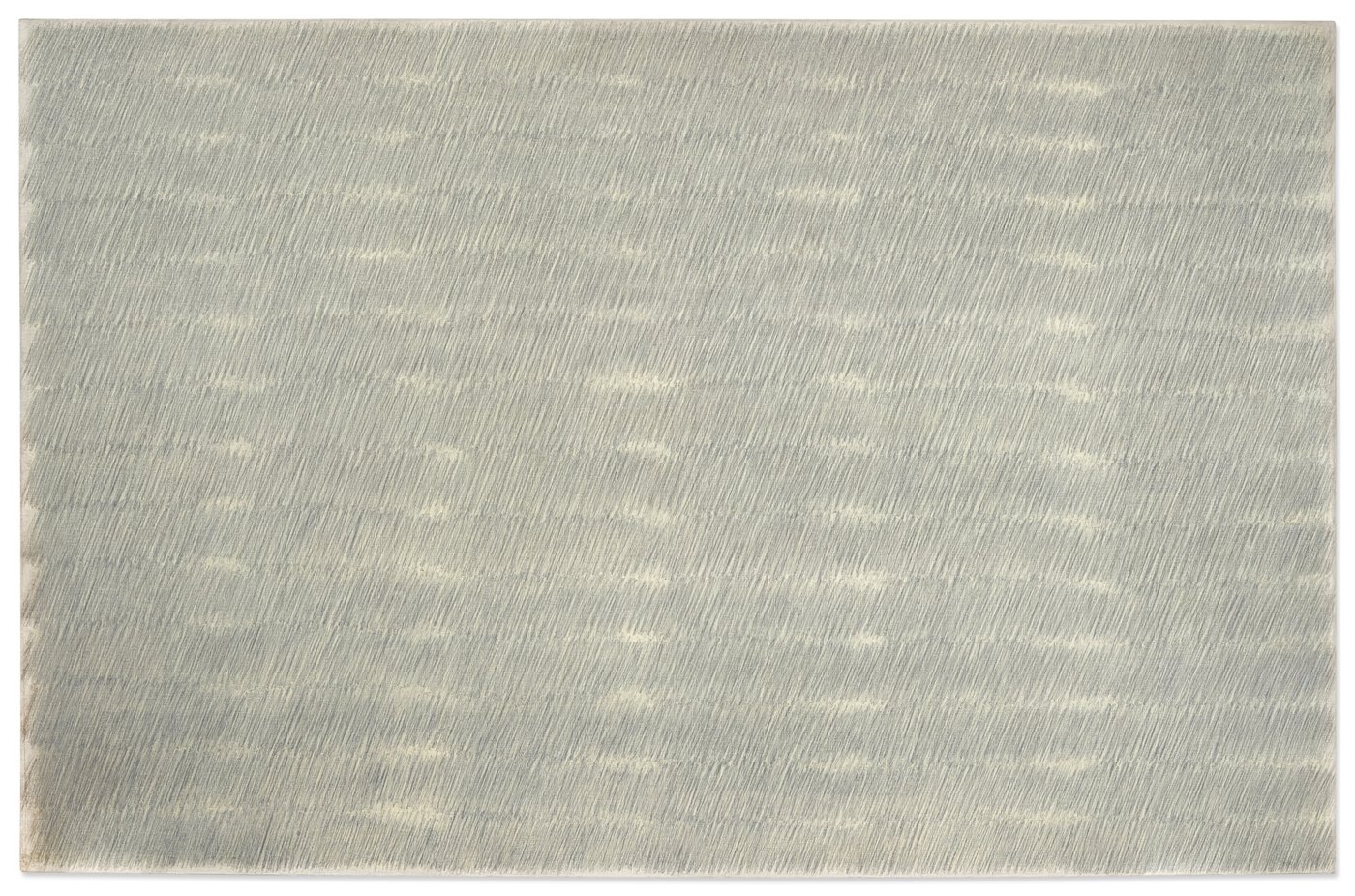
All ten were painted in the 1970s, and every one whose medium is recorded is a pencil painting. Four of the ten sold in 2017. The first two are the same picture: the 2023 catalogue lists the 2018 sale in its provenance. Only one of the ten, in March 2025, came after his death.
Three more Sotheby's results, from 2016 and 2018, would place between fifth and tenth if their prices are right, but they appear only on Artsy and I could not confirm them. One of them was sold in a 2016 Hong Kong sale put together by the singer T.O.P, with part of the proceeds given to charity.
What the 2022 to 2026 record is made of
I pulled every Park that sold at a Korean auction from January 2022 to August 2026: 411 lots after removing four rows entered twice.
| Type | Lots | Median | Share of total |
|---|---|---|---|
| Paintings on canvas, hemp or cotton | 99 | $126,784 | 84.7% |
| Works on paper | 13 | $41,764 | 2.7% |
| Prints and editions | 298 | $4,102 | 12.5% |
| Porcelain | 1 | $22,374 | 0.1% |
Nearly three in four lots are prints or editions. More than four in five dollars went to paintings.
Not all Park prints are the same kind of object
| Kind | Lots | Median | Range |
|---|---|---|---|
| Relief print on hanji | 10 | $39,154 | $19,391 to $52,205 |
| Cast hanji edition | 51 | $20,136 | $11,187 to $76,891 |
| Mixografia | 41 | $18,645 | $2,983 to $34,306 |
| Screenprint with UV texture | 14 | $5,854 | $1,939 to $12,306 |
| Pigment print | 112 | $3,244 | $970 to $13,424 |
| Matiere and 2.5D print | 21 | $2,983 | $1,492 to $5,370 |
| Lithograph and offset lithograph | 42 | $1,715 | $597 to $4,176 |
The cast hanji editions are made the way the paintings are built up: hanji fibre is cast in a silicone mould, then airbrushed and coloured by hand. The publisher, ARTN Edition, lists Ecriture No. 20-22, the most expensive print in the record at $76,891, as an edition of 30.
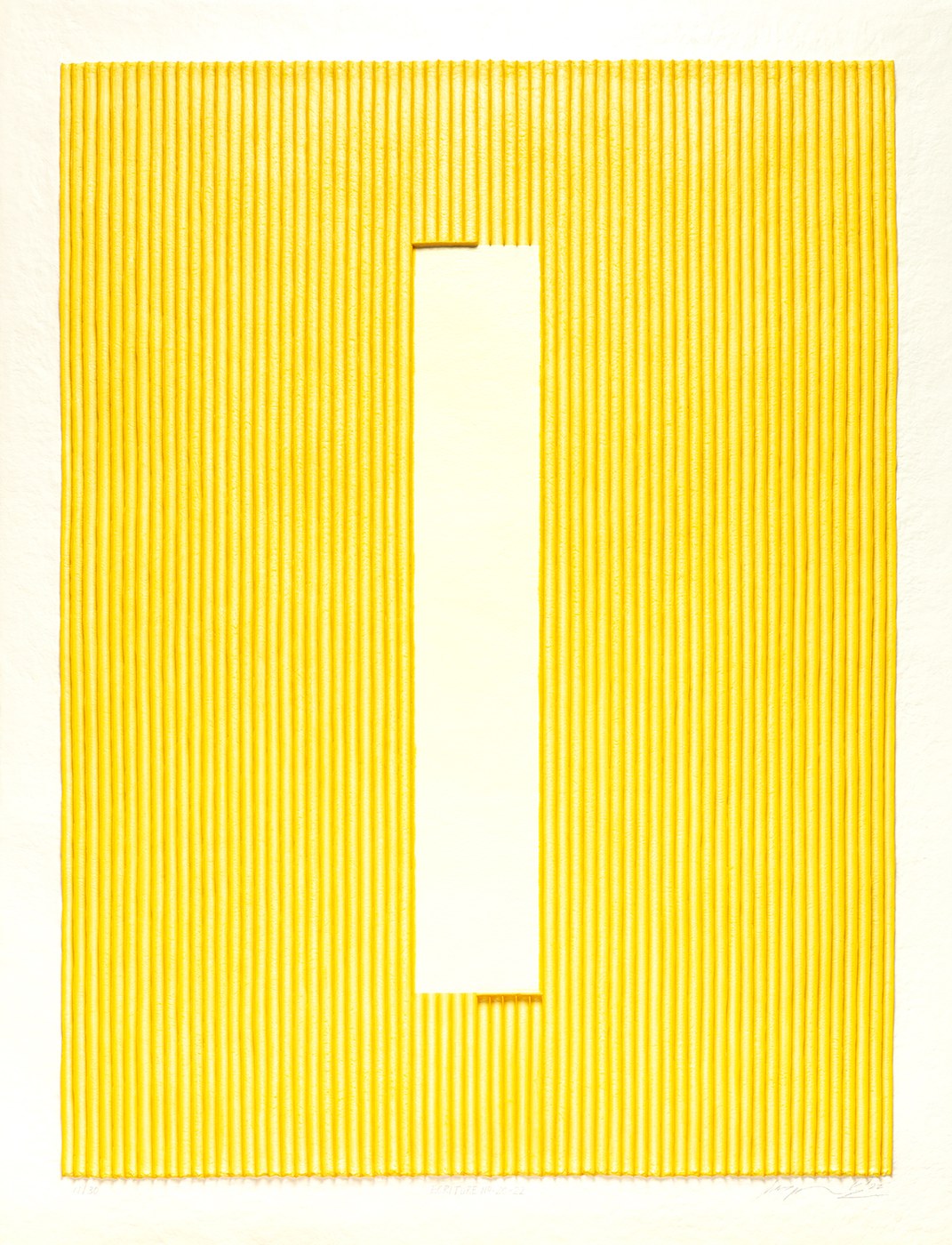
The Mixografia prints come from the Mixografia workshop in Los Angeles, printed on handmade paper. Its records list unique monoprints from 1994 and editioned prints from 1997 and 2002. Ecriture No. 203, the one that turns up most in Korea, is from 2002 in an edition of 30 with four HC proofs.
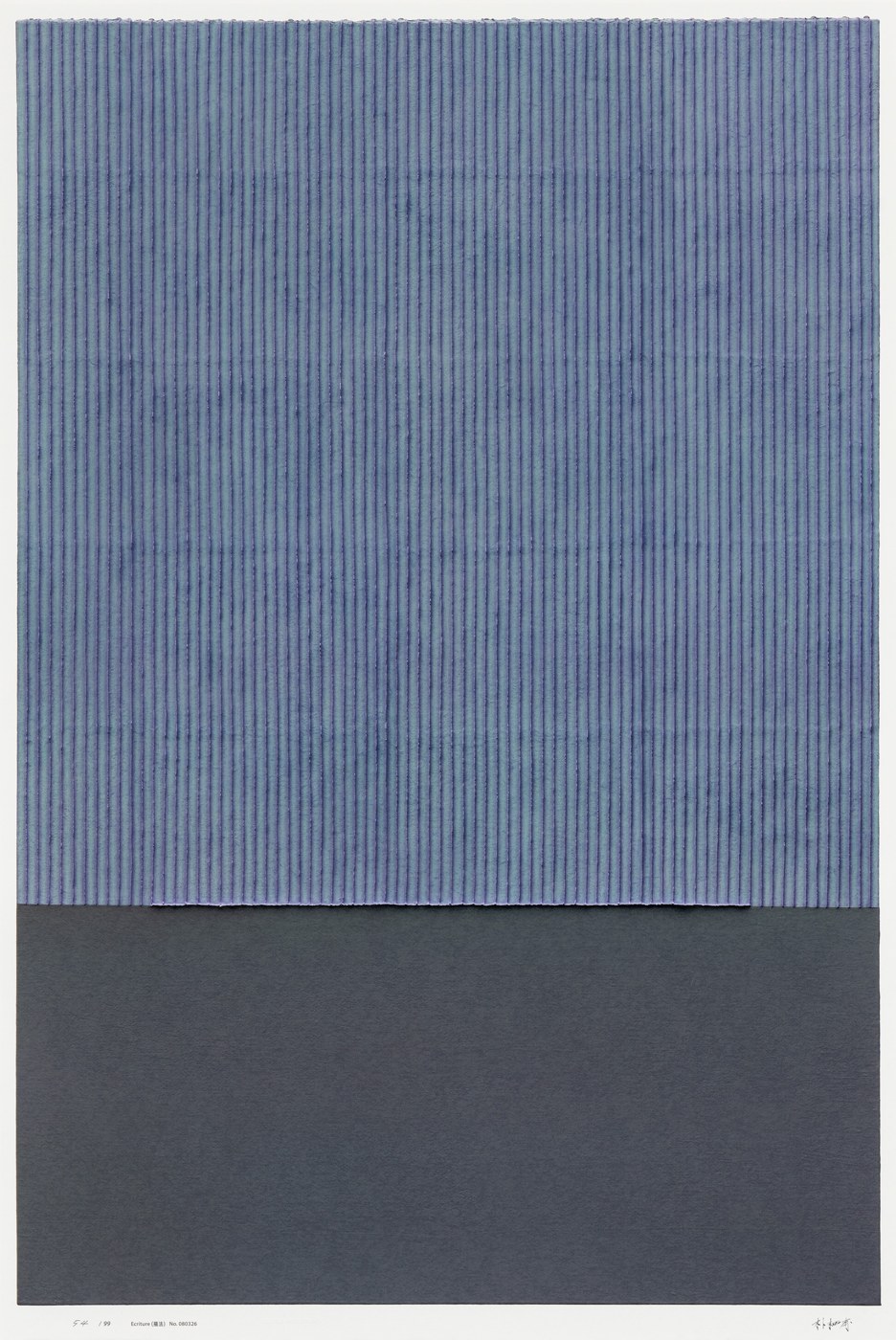
Pigment prints are digital prints of Ecriture paintings. They are the commonest Park at Korean auction, 112 lots, and most sell for a few thousand dollars. The records almost never give an edition size; one auction photograph of No. 080326 shows /99 in the margin, an edition of 99.
The same prints, year by year
Six of the seven prints that sold most often are selling for less than in 2022.| Kind | 2022 | Later | |
|---|---|---|---|
| Ecriture No. 1-06 | Cast hanji | $20,882 to $25,357 (4 lots) | $11,187 each in 2024, 2025 and 2026 |
| Ecriture No. 2-06 | Cast hanji | $16,034 to $20,136 (5 lots) | $11,187 (3 lots, 2024 and 2025) |
| Ecriture No. 203 | Mixografia | $26,103 to $34,306 (4 lots) | $23,865 to $26,848 (2 lots, 2023) |
| Ecriture No. 161231 | Screenprint with UV texture | $5,966 to $12,306 (3 lots) | $4,848 to $5,743 (3 lots, 2025) |
| Ecriture No. 40-73 | Pigment print | $4,624 to $5,966 (5 lots) | $2,610 to $3,281 (3 lots, 2025) |
| Ecriture No. 218-85 | Pigment print | $2,685 to $2,909 (3 lots) | $1,342 to $2,387 (3 lots, 2026) |
| Ecriture No. 080326 | Pigment print | $2,237 to $3,580 (3 lots) | $2,983 to $4,400 (3 lots, 2026) |
The two cast hanji editions lost close to half. One sale of No. 1-06 in May 2023, at $41,764, stands well above every other result for that print. Only the No. 080326 pigment print held its level. Nothing here suggests prints picked up after his death in October 2023.
What to check before bidding
Check what the object is. The same title covers a $970 print and a painting that made $790,537, and only the medium line tells them apart.
Within prints, check the kind. Cast hanji and Mixografia sell around $20,000; pigment prints around $3,000; lithographs under $2,000. A print with real paper relief is a different thing from a flat print of one.
Ask for the edition size. It is documented for the Mixografia and cast hanji editions above and missing for most pigment prints. This guide to print marks covers what to look for on the sheet.
Use recent sales of the same print, not 2022 prices, as the yardstick.
For paintings, check the period and the medium. The ten highest Korean prices whose medium is recorded are all pencil paintings; hanji paintings of the same size have sold for less.
Budget for the premium. Seoul Auction's Korean sales add 18 percent plus VAT on that fee; K Auction's live sales add 16.5 percent including VAT.
What the record cannot tell you
The Korean top ten combines K-Artprice records from January 2015 to June 2021, K-artmarket records from January 2022 to August 2026, and press reports for October 2021. I could not check sales before 2015 or from July to December 2021 lot by lot, and the October 2021 record is taken from Seoul Auction's lot page: sold on 26 October 2021 against an estimate of 900 million to 1.5 billion won.
K-Artprice also lists Ecriture No. 10-78 at 980 million won in July 2019. I found no other source for that sale, and it is left out.
Four 2025 Seoul Auction rows appeared twice on the same day at the same price, one without a photograph, and were removed without confirming the number of works offered.
Korean auction data from K-artmarket, January 2022 to August 2026, retrieved 16 September 2026, and K-Artprice for January 2015 to June 2021. Korean prices are hammer prices converted at 1,340.86 won to the dollar (rate of 9 September 2026). Foreign prices include premium, converted at 0.12753 dollars to the Hong Kong dollar and 1.35418 dollars to the pound. Foreign results from Christie's lot pages, The Value (Sotheby's Hong Kong 2017 and 2023), Sotheby's (2018), Phillips, and Ocula (Sotheby's New York 2017); Seoul Auction 2021 record from Seoul Economic Daily and Seoul Auction's lot page. Biography from the Park Seo-Bo Foundation, the Daarts oral history archive, MMCA, Kukmin Ilbo and Kyunghyang Shinmun; 1975 exhibition from Tokyo Gallery; museum opening from Seoul Shinmun. Print details from Mixografia and ARTN Edition.